Modern-Day Circumstances, Islamic Rulings, and the True Reality
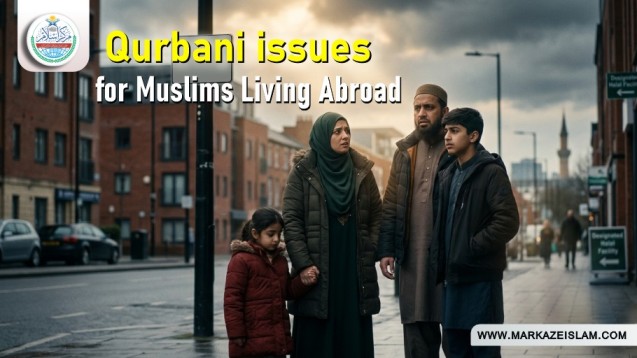
Qurbani is not merely a ritual or a part of a festival; rather, it is a reminder of the عظیم obedience, sacrifice, and complete submission of Hazrat Ibrahim (AS) and Hazrat Ismail (AS) before the command of Allah Almighty. Today, millions of Muslims around the world perform Qurbani on the occasion of Eid al-Adha, but for Muslims living abroad, this act of worship also brings many new questions and challenges. Particularly in Europe, America, Canada, Australia, and other non-Muslim countries, Muslims often find themselves confused about where they should perform Qurbani, how the meat should be distributed, what the government laws say, and whether it is Islamically valid to arrange Qurbani in another country.
Table of Contents
These questions are not only practical in nature but are also highly important from a jurisprudential and Islamic perspective. Therefore, it is necessary to understand this topic with detail, research, and authentic evidence.
What Difficulties Do Muslims Living Abroad Face?
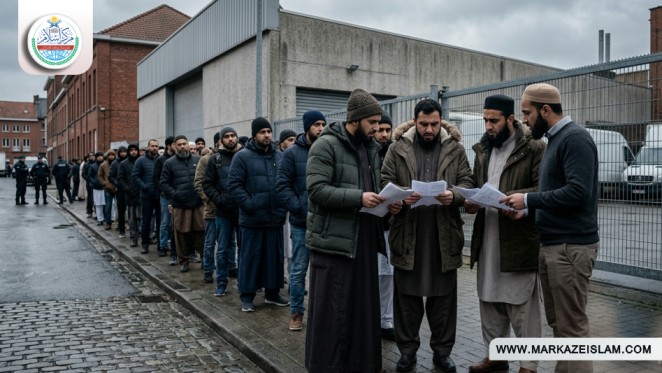
In non-Muslim countries, the greatest challenge during Qurbani is government restrictions and legal regulations. In many countries, slaughtering animals at home is not permitted. Instead, Qurbani is only allowed at officially approved facilities designated by the authorities. The reasons behind these rules include hygiene standards, animal rights, and national laws.
In some European countries, Islamic slaughter methods are also a subject of debate because certain laws require animals to be stunned before slaughter. This creates an important question for Muslims: Is such a Qurbani Islamically valid or not?
Islamic jurists have clarified that if the animal is alive at the time of slaughter and its veins are cut according to the Islamic method, then the Qurbani is valid. However, caution is necessary in such matters, and it is better to seek guidance from reliable scholars or Islamic organizations.
The Growing Trend of Performing Qurbani in Other Countries
Nowadays, many Muslims living abroad arrange their Qurbani through charitable organizations in Pakistan, India, Bangladesh, Africa, and other poorer countries. One major reason for this is that Qurbani in Western countries is extremely expensive, whereas in poorer countries, the meat can reach a larger number of deserving people at a much lower cost.
From an Islamic perspective, it is permissible to appoint someone as a representative to perform Qurbani in another country, provided that the sacrifice is carried out within the prescribed time and according to Islamic principles.
According to a jurisprudential principle:
“Al-Wakalah fil-Dhabh Ja’izah”
Meaning:
“It is permissible to appoint someone as a representative for slaughter.”
Based on this principle, many Islamic charitable organizations arrange collective Qurbani projects around the world.
What Is the Real Ruling Regarding the Meat of Qurbani?
Allah Almighty says in the Holy Qur’an:
“فَكُلُوا مِنْهَا وَأَطْعِمُوا الْبَائِسَ الْفَقِيرَ”
Translation:
“So eat from it yourselves and feed the poor and needy.”
— Surah Al-Hajj: 28
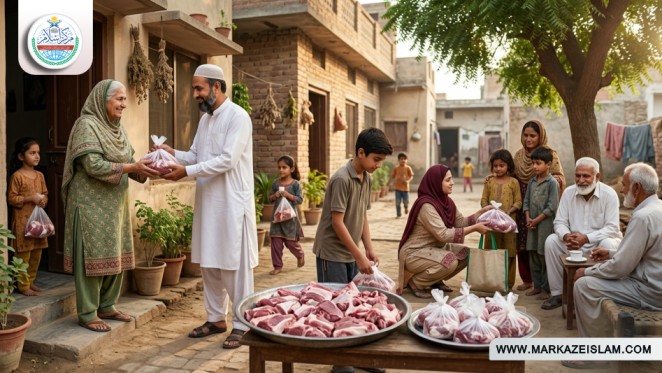
This blessed verse makes it clear that the purpose of Qurbani is not merely slaughtering an animal, but also delivering meat to the poor, the needy, and those in need.
The blessed Ahadith also contain clear guidance regarding the meat of Qurbani.
Hazrat Aisha (RA) narrated that the Messenger of Allah ﷺ said:
“Eat from it, store it, and give in charity.”
(Sahih Muslim)
In the explanation of this Hadith, scholars have written that it is recommended to divide the meat of Qurbani into three portions:
- One portion for oneself
- One portion for relatives and friends
- One portion for the poor and needy
Is It Necessary to Divide the Meat into Three Portions?
There is a common misunderstanding that the meat must be divided into exactly three equal portions, whereas according to Islamic jurists, this is a recommended and preferred method, not an obligation.
The actual purpose is:
- To eat from it oneself
- To share it with others
- To take care of the poor and needy
It is narrated from Imam Ahmad (RA) that one-third should be eaten personally, one-third should be gifted, and one-third should be given in charity. However, even if someone increases or decreases these portions, the Qurbani still remains valid.
Can Qurbani Meat Be Given to Non-Muslims?
This question is especially important for Muslims living abroad because many of their neighbors, colleagues, and friends are non-Muslims.
Some Islamic jurists have permitted giving voluntary charity and Qurbani meat to non-Muslims, especially if it promotes good treatment, positive relations, and the message of Islam.
Islam teaches humanity, compassion, and helping those in need. Therefore, according to some scholars, if a non-Muslim person is needy, it is permissible to give them Qurbani meat. However, some scholars prefer restricting it to Muslims out of caution, which is why consulting local scholars is advisable.
What Should Be Done If There Are No Deserving Muslims Nearby?
In some areas abroad, the Muslim population is very small, or deserving individuals are difficult to find. In such situations, the question arises: To whom should the Qurbani meat be given?
According to scholars:
- It can be given to Islamic centers
- It can be sent to other cities or countries
- Needy non-Muslims may also be helped
This reflects the social beauty of Islam, as this act of worship is not limited to personal happiness but also becomes a means of collective welfare and service to humanity.
Is It Permissible to Preserve Qurbani Meat?
Some people believe that Qurbani meat must be distributed immediately and cannot be stored for a long time. However, in the early period of Islam, storing meat beyond three days was prohibited due to a specific circumstance, and later the Messenger of Allah ﷺ permitted it.
Hazrat Aisha (RA) narrated that the Prophet ﷺ said:
“Now eat, store it, and give in charity.”
(Sahih Muslim)
Therefore, in today’s time, preserving Qurbani meat is permissible.
The True Spiritual Purpose of Qurbani

Sadly, in some places today, Qurbani has become merely a ritual, a display, or a means of social superiority, whereas the Holy Qur’an describes the true spirit of Qurbani in these words:
“Neither their meat nor their blood reaches Allah, but your piety reaches Him.”
— Surah Al-Hajj: 37
This verse clearly explains that Allah Almighty values sincerity, intention, and piety more than the outward act of sacrifice itself.
Muslims living abroad often perform Qurbani despite financial difficulties, legal restrictions, and social challenges, and this itself becomes a sign of their sincerity and love for Allah Almighty.
The Importance of Trust and Honesty in the Modern Era
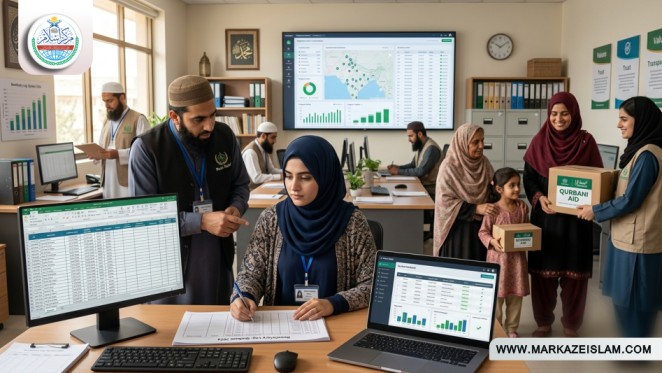
With the increasing trend of collective Qurbani, another important issue has emerged: trust and honesty. Some people complain that they do not even know whether the Qurbani was actually performed, where the meat went, and who received it.
For this reason, choosing trustworthy and honest organizations is extremely important. Such organizations:
- Provide complete details of the Qurbani
- Explain who the deserving recipients are
- Maintain Islamic supervision
- Clarify the timing and method of the sacrifice
Such precautions strengthen peace of mind and trust in this act of worship.
For Muslims living abroad, Qurbani certainly brings many new challenges and tests, but Islam is a balanced, practical, and easy religion. If the intention is sincere, Islamic principles are followed, and reliable means are chosen, then Qurbani can be performed correctly in any part of the world.
Qurbani is not merely the slaughtering of an animal; rather, it teaches sacrifice, love, obedience, generosity, and connection with humanity. This is why Islam strongly emphasizes delivering Qurbani meat to the poor, the needy, and the weaker members of society so that the joy of Eid may reach every human being.
Important References
- The Holy Qur’an — Surah Al-Hajj, Verses 28 and 37
- Sahih Muslim
- Classical books of Islamic jurisprudence and opinions of contemporary scholars
- Islamic charitable organizations and their Shariah guidance