The Truth of the Human Inner World
The age in which humanity lives today is the fastest age of convenience and information. Yet, in this same era, one question exists with greater intensity than ever before. If we look at the life of an ordinary human being, the answer will mostly be “no.” Today, a person possesses everything, yet still carries within an emptiness, a void, and an unnamed restlessness.
Table of Contents
The human mind is constantly receiving information. Every moment, something is always running. Thoughts, images, sounds, messages, and endless comparisons.
This continuous input never allows the human mind to truly rest. A point eventually comes where a person becomes exhausted, yet is unable to stop.
This is the place from where restlessness begins to emerge. Outwardly, a person appears busy, but inwardly, they gradually become empty.
Is Humanity Truly at Peace?
For most people, the answer would be “no.” And this is not surprising, because the Qur’an itself describes this condition of human beings:
“أَلَا بِذِكْرِ اللّٰهِ تَطْمَئِنُّ الْقُلُوبُ”
(Surah Ar-Ra’d 13:28)
“Indeed, it is through the remembrance of Allah that hearts find peace.”
This verse teaches us a fundamental principle: peace does not come from external things, but is connected to an inner relationship.
In other words, the real issue is not the circumstances themselves, but the direction of the heart.
The Constant Burden on the Mind
Today, the human mind remains continuously occupied. Thoughts, information, messages, comparisons, and fears — everything runs together at the same time.
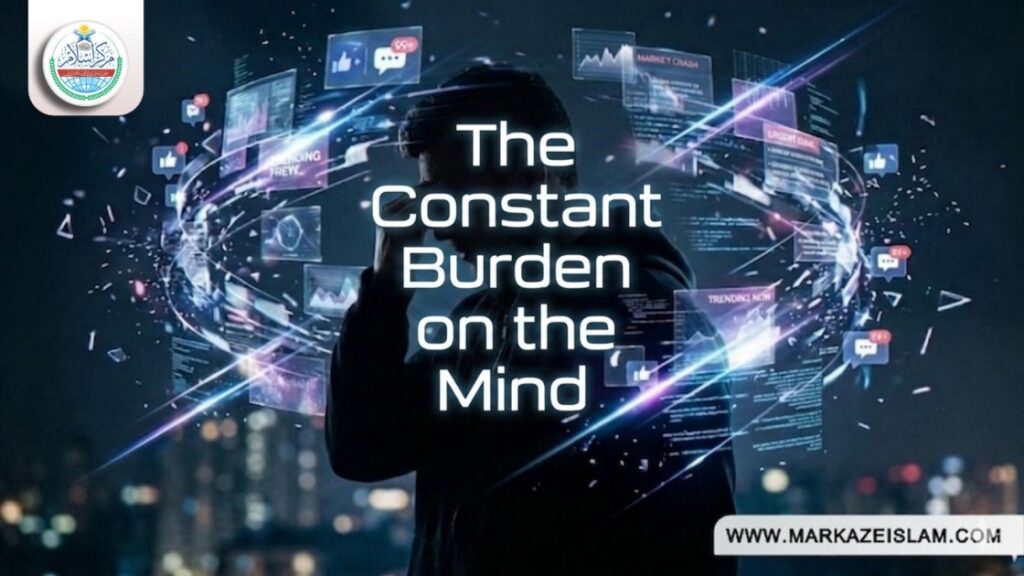
A person lives in multiple worlds within a single moment. Sometimes they are trapped in the past, sometimes lost in the future, while the present often slips away from them.
The Qur’an points toward this human condition:
“وَلَقَدْ خَلَقْنَا الْإِنسَانَ وَنَعْلَمُ مَا تُوَسْوِسُ بِهِ نَفْسُهُ”
(Surah Qaf 50:16)
“We created the human being, and We know the whispers that arise within their soul.”
This means that the human inner system is always in motion, and if it is not given direction, it gradually transforms into restlessness.
Why Does Restlessness Increase?
The Qur’an explains another fundamental reality:
“وَمَنْ أَعْرَضَ عَنْ ذِكْرِي فَإِنَّ لَهُ مَعِيشَةً ضَنْكًا”
(Surah Taha 20:124)
“And whoever turns away from My remembrance, for them will be a life of hardship.”
Here, “a life of hardship” does not refer only to financial struggle, but also to mental, emotional, and spiritual constriction.
This means that when a person becomes distant from their spiritual center, feelings of anxiety, emptiness, and inner pressure begin to grow within them.
The Scattering of Attention
Today, one of the greatest trials for humanity is attention itself.
In a single moment, it becomes scattered in many directions — sometimes toward the phone, sometimes toward thoughts, sometimes toward fear, and sometimes toward comparison.
The Qur’an gives humanity a profound principle:
“وَلَا تَكُونُوا كَالَّذِينَ نَسُوا اللّٰهَ فَأَنسَاهُمْ أَنفُسَهُمْ”
(Surah Al-Hashr 59:19)
“Do not become like those who forgot Allah, so Allah caused them to forget themselves.”
This verse reveals a deep psychological principle: when a person forgets their true essence, they also become distant from themselves.
Emotions and the Inner Burden
Human beings do not become tired only physically; they also become exhausted emotionally.
Every day, they pass through different emotions:
- Sometimes happiness
- Sometimes anger
- Sometimes fear
- Sometimes comparison
- Sometimes the feeling of failure
These emotions are not the actual problem. The real issue is that instead of understanding them, people suppress them.
Over time, these suppressed emotions turn into an inner burden.
The Qur’an describes this condition with hope:
“فَإِنَّ مَعَ الْعُسْرِ يُسْرًا”
(Surah Ash-Sharh 94:6)
“Indeed, with hardship comes ease.”
This verse teaches human beings that every condition is temporary. No state remains forever. When a person truly understands this, the intensity of inner anxiety begins to lessen.

The Wrong Search for Peace
The real issue is not life itself. The real issue is that human beings often search for peace outside themselves:
- In success
- In people
- In constant busyness
- Or in endless change
But all of these things provide only temporary relief, not lasting peace. When a person tries to extract peace from everything around them, they become even more exhausted. Real transformation begins when a person shifts from merely “doing” to truly “being.”
How Does Peace Arrive?
Peace does not come through some massive revolution. It comes through small, conscious decisions:
- Sitting quietly for a while
- Not reacting immediately to everything
- Staying away from unnecessary information
- Listening to the voice within
- Slowing down one’s pace
These small steps gradually begin to change a person’s mental state.
What Does Science Say?
According to science, the human brain is continuously influenced by its environment.
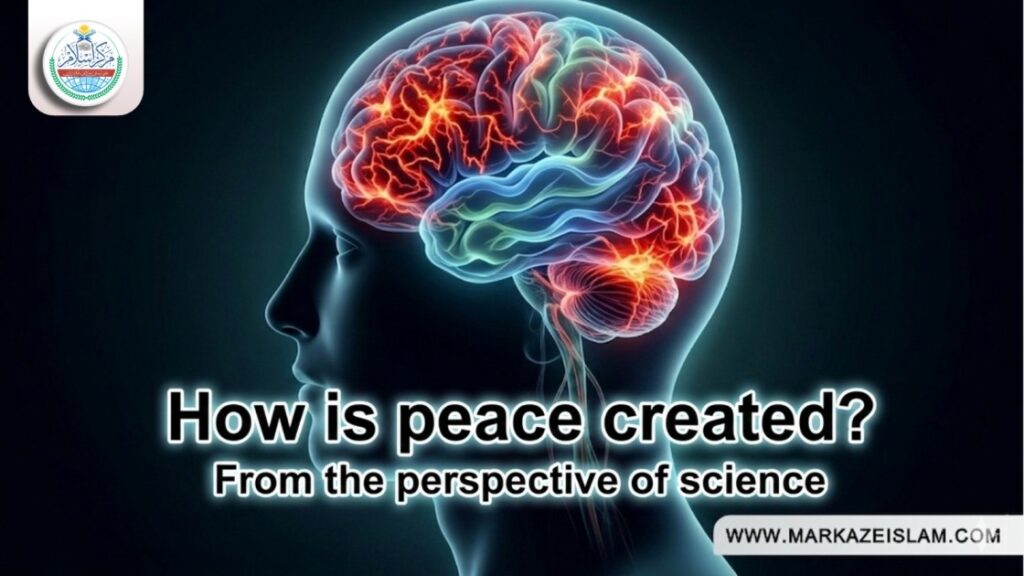
If the mind remains constantly surrounded by:
- Stress
- Fear
- Anger
- Or rapid streams of information
Then the nervous system also remains trapped in the same condition. This continuous activation does not allow the brain to rest.
When the brain does not receive pauses or recovery time:
- Sleep becomes affected
- Focus begins to weaken
- And anxiety increases
This is why mental rest is not only an emotional need but also a biological necessity.
Silence and Awareness
Silence is not merely the absence of sound. It is an inner state where a person observes their thoughts.
Instead of reacting to them immediately, they give themselves time to understand them.
The Qur’an repeatedly invites humanity toward reflection:
“أَفَلَا يَتَدَبَّرُونَ الْقُرْآنَ”
(Surah Muhammad 47:24)
“Do they not reflect deeply upon the Qur’an?”
This contemplation is, in reality, a form of inner silence.

What Is Inner Silence?
Inner silence does not mean that life comes to a stop.
It means that:
- The mind stops running all the time endlessly
- A person does not react instantly to everything
- And they create a pause within themselves
This pause gives a person the opportunity to reconnect with themselves once again. It is the place where a human being begins to feel their original state.
The Qur’an expresses this reality in a deeply simple yet profound way:
“أَلَا بِذِكْرِ اللّٰهِ تَطْمَئِنُّ الْقُلُوبُ”
And perhaps this is the final truth that human beings eventually arrive at:
That peace is not found outside… it returns from within.