The Complete, Step by Step Guide
In life there come moments when a person stands between two paths. On one side there is a good marriage proposal, yet the heart is not fully at ease. On the other side there is a new job offer, yet there are apprehensions as well. Somewhere there is the question of a business partnership, somewhere a decision about travel or a house. We consult people, we weigh up the gains and losses, and still, in some corner of the heart, a restlessness remains: Am I making the right decision?
Table of Contents
Islam has taught the remedy for this restlessness in the form of a beautiful act of worship called Istikhara. It is neither a magical practice nor a means of finding out what the future holds. It is the servant saying to his Lord: “O Allah! I have done my best within the limits of my intellect, experience and consultation; now You alone know what is better for me.”
In this article we will understand the Sunnah method of Istikhara step by step: the preparation before Istikhara, how to perform the prayer, the text and translation of the supplication, what to do after Istikhara, and the common misconceptions that are widespread among people. If your mind is unsettled because of some decision, our article Peace and Restlessness: The Truth About Man’s Inner World will also be useful to you.
What Is Istikhara? Its Linguistic and Technical Meaning
The word Istikhara comes from the Arabic root (kh, y, r), which means goodness and what is best. In the verb form istif’āl (Form X), its meaning becomes: to seek what is good, that is, to ask Allah the Almighty to make easy, in this matter, the very path that is best for me.
In the terminology of the Shariah, Istikhara is the name of the two-rak’at voluntary (nafl) prayer and the specific Masnoon supplication that a person performs when making a decision about a permissible matter, when it is not clear to him whether it is better to do this thing or not to do it. The scholars have described its reality thus: the servant entrusts his own choice to Allah the Almighty, because He alone is fully aware of the outcome.
Istikhara has also been described as a kind of consultation, but this consultation is not with the creation; it is with the Creator. One who asks Allah for counsel is seeking guidance from the One who knows the unseen, and this is the greatest beauty of this act of worship.
The Shar’i Status and Importance of Istikhara
The basis of Istikhara is the well-known hadith in Sahih al-Bukhari. Hazrat Jabir ibn Abdullah (may Allah be pleased with them both) says that the Noble Prophet (peace and blessings of Allah be upon him) used to teach us Istikhara in all matters with the same care with which he would teach us a surah of the Quran. He ﷺ said that when any one of you intends to do something, he should pray two rak’at of voluntary prayer, other than the obligatory prayer, and then make this supplication (which is coming ahead with its full text).
Several things become clear from this hadith.
٭Istikhara is a Sunnah and a mustahabb (recommended) act, which the Noble Prophet ﷺ himself taught.
٭It was taught for every matter, not only for major decisions.
٭The care taken in teaching its words was like that for a surah of the Quran, which means that memorising the text of the supplication and reciting it correctly is better.
٭It also becomes known that the method of performing Istikhara oneself has been taught, and this is the real Sunnah.
In the Noble Quran, the foundation of this entire outlook is this verse: “وَعَسَىٰ أَن تَكْرَهُوا شَيْئًا وَهُوَ خَيْرٌ لَّكُمْ ۖ وَعَسَىٰ أَن تُحِبُّوا شَيْئًا وَهُوَ شَرٌّ لَّكُمْ ۗ وَاللَّهُ يَعْلَمُ وَأَنتُمْ لَا تَعْلَمُونَ” (Surah al-Baqarah: 216). That is, it may be that you dislike something and it is good for you, and it may be that you like something and it is bad for you; Allah knows and you do not know. Istikhara is the practical acknowledgement of this very reality, that our knowledge is limited.
Similarly, in Surah Aal-e-Imran (verse 159), the sequence of consultation, then resolve, and then tawakkul (reliance upon Allah) is described: “فَإِذَا عَزَمْتَ فَتَوَكَّلْ عَلَى اللَّهِ”, that is, when you have made a firm resolve, then place your trust in Allah. Istikhara is a beautiful form of this very tawakkul.
For Which Matters Is Istikhara Done?
Istikhara is done when a lawful and mubah (permissible) matter arises and there is hesitation about doing it or not doing it. Generally, the following matters are examples of this.
٭Deciding about a marriage proposal and marriage (nikah)
٭Taking a job, changing employment, or starting a business
٭A decision about a business partnership or a major transaction
٭Buying a house, renting one, or moving to another city
٭Intending to travel
٭Choosing a field of education or career
On the subject of delays and obstacles in marriage decisions, our detailed article Wazifa for Marriage is also worth reading, because before settling a marriage proposal, Istikhara and wazifa each have their own place. Similarly, for hardship in employment and livelihood, you can see Wazifa for Blessing in Sustenance (Rizq).
For Which Matters Is Istikhara Not Done?
The scholars have made clear that Istikhara is not done in matters whose ruling the Shariah has already stated:
٭Obligatory (fard) and necessary (wajib) acts: There is no need for Istikhara regarding prayer, fasting, zakat, the rights of parents and so on; these must simply be acted upon.
٭Haram and prohibited acts: Avoiding sin is necessary in every circumstance; doing Istikhara for it is meaningless.
٭Mustahabb (recommended) acts and the basis of acts of worship: Whether to perform an act of worship or not is not the subject of Istikhara; however, there is room for it in choosing a particular form or time for them.
Remember this also: Istikhara is not a substitute for the diagnosis or treatment of an illness, or for a doctor’s advice. In matters of health, consulting a specialist physician is the correct way; Istikhara can only accompany that, as a supplication, in making some lawful choice.
One more thing has become very common these days. Some people have Istikhara done in order to find out the cause of obstacles in business, of not getting a job, or of constant troubles in life, to see whether someone has done magic, a bandish (binding spell) or the evil eye (nazar-e-bad). Whereas the primary purpose of Istikhara is to seek good and guidance from Allah the Almighty in a matter, not merely to diagnose magic, bandish or the evil eye through it. However, for Shar’i guidance in any matter and for the correct method of diagnosis, one may turn to the people of knowledge.
To obtain correct Shar’i information about Magic, the Evil Eye and Other Influences, please see these writings of ours.
Preparation Before Istikhara

Many people perform Istikhara but cannot understand the answer, and a major reason for this is a lack of preparation. Before Istikhara, keep these things in mind:
٭First, complete your effort and gather your information. Istikhara is not a substitute for effort but a step that comes after effort. If it is a marriage decision, research the religion, character and family of the young man or woman. If it is a job decision, understand the terms, the salary and the environment.
٭Consult people of knowledge and understanding. The Noble Quran has taught consultation, and consultation is part of the preparation for Istikhara. Taking the opinion of parents, experienced relatives and experts in the relevant field is wisdom.
٭Try to empty your heart of any inclination toward one side. If you have already become fixed on one decision and only want to have it stamped with approval, then the real purpose of Istikhara is lost. Say from the heart: whatever is better for me, let that be, even if it is against my wish.
٭Take care of your intention and of what is halal. The matter for which you are doing Istikhara should be lawful, and your heart should be turned toward the pleasure of Allah. If there is any aspect of sin or injustice, it is necessary to remove it beforehand.
٭Understand the text and translation of the supplication. When you know what you are asking from Allah, the heart is engaged in the supplication. For this reason we have given the complete translation ahead as well.
For those for whom making decisions itself becomes a constant worry, that is, those who experience intense anxiety in every small and big matter, disturbed sleep, or a state of repeated doubt, they should also speak, along with supplication and Istikhara, to a trustworthy elder or a psychologist. This is not against tawakkul but is part of adopting the means (asbab).
The Method of Istikhara, Step by Step
Now we come to the main subject. The steps given below have been arranged in the light of the Sahih al-Bukhari hadith of Jabir (RA) and the explicit statements of the jurists (fuqaha).
Step 1: Make Your Matter Clear
First of all, decide what exactly you are doing Istikhara about. The clearer the question, the easier it will be to recognise the state of the heart. For example, “Should I accept the job at such-and-such company?” is a clear question, whereas “How will all the problems of my life be solved?” is not a subject for Istikhara. If there are several paths, it is better that you first choose one path with your intellect and consultation and do Istikhara for that one, or do a separate Istikhara for each path.
Step 2: Wudu and Intention
Stand facing the qiblah, in a state of wudu, on a clean place. Make the intention in your heart: “I am performing two rak’at of voluntary prayer for Istikhara for the pleasure of Allah.” It is not necessary to make the intention verbally; the resolve of the heart is sufficient. If you wish to say it aloud, you can say it thus: “I intend to pray two rak’at of nafl prayer of Istikhara, for the sake of Allah the Almighty, my face toward the Ka’bah Sharif.”
Step 3: Choosing a Suitable Time
No particular time has been fixed in the hadith for Istikhara, so it can be prayed at any time of day or night at which a voluntary prayer is not makruh (disliked). Do not pray at the times of sunrise, zawal (when the sun is at its zenith) and sunset, and according to Hanafi fiqh, voluntary prayer is also makruh after the Fajr prayer until sunrise and after Asr until sunset. It is also true in its own place that in the calm hours of the night, for example after Isha or in the last part of the night, the heart is more focused, but there is no compulsory condition for this. In no religious source is any particular day, date or hour fixed without which Istikhara would not be accepted; therefore, pay no attention to statements that impose such conditions.
Step 4: Perform Two Rak’at of Nafl
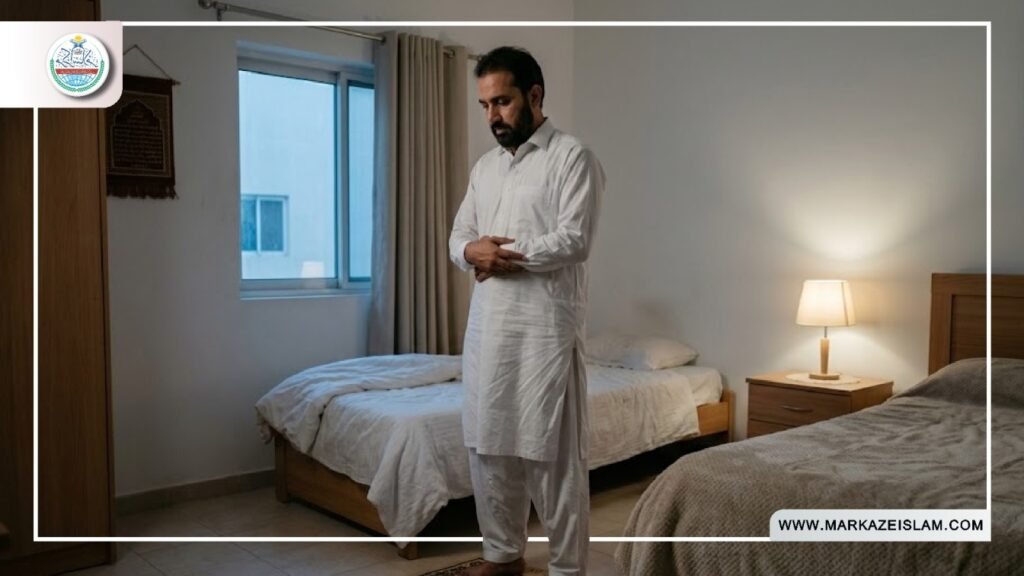
Pray two rak’at as in an ordinary voluntary prayer. The jurists have mentioned that it is better to recite Surah al-Kafirun after Surah al-Fatiha in the first rak’ah and Surah al-Ikhlas in the second. This is mustahabb, not obligatory. If you do not remember these surahs, or wish to recite some other surah, the prayer will be valid. The real thing is khushu’ (humility and devotion), tranquillity and the heart’s turning toward Allah. The intention of Istikhara together with an obligatory prayer is not sufficient unless you made the intention of Istikhara in that same prayer; therefore, it is better to pray two rak’at separately.
Step 5: Recite the Supplication of Istikhara After the Salam
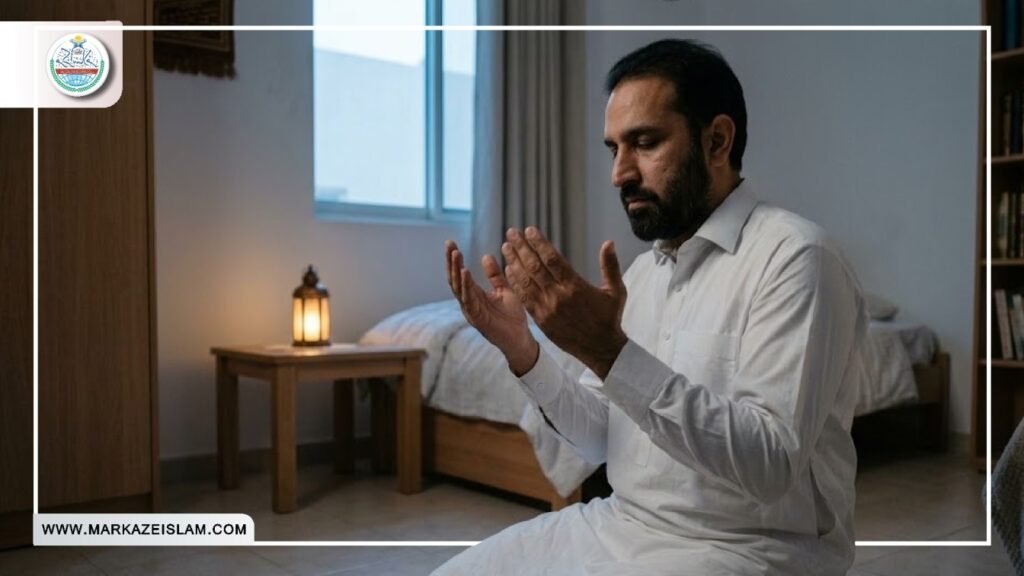
After completing the prayer and turning the salam, praise and glorify Allah the Almighty and send durood sharif (blessings) upon the Noble Prophet ﷺ, then recite this Masnoon supplication.
اَللّٰهُمَّ إِنِّي أَسْتَخِيرُكَ بِعِلْمِكَ، وَأَسْتَقْدِرُكَ بِقُدْرَتِكَ، وَأَسْأَلُكَ مِنْ فَضْلِكَ الْعَظِيمِ، فَإِنَّكَ تَقْدِرُ وَلَا أَقْدِرُ، وَتَعْلَمُ وَلَا أَعْلَمُ، وَأَنْتَ عَلَّامُ الْغُيُوبِ۔ اَللّٰهُمَّ إِنْ كُنْتَ تَعْلَمُ أَنَّ هٰذَا الْأَمْرَ خَيْرٌ لِي فِي دِينِي وَمَعَاشِي وَعَاقِبَةِ أَمْرِي، أَوْ قَالَ: عَاجِلِ أَمْرِي وَآجِلِهِ، فَاقْدُرْهُ لِي وَيَسِّرْهُ لِي ثُمَّ بَارِكْ لِي فِيهِ۔ وَإِنْ كُنْتَ تَعْلَمُ أَنَّ هٰذَا الْأَمْرَ شَرٌّ لِي فِي دِينِي وَمَعَاشِي وَعَاقِبَةِ أَمْرِي، أَوْ قَالَ: فِي عَاجِلِ أَمْرِي وَآجِلِهِ، فَاصْرِفْهُ عَنِّي وَاصْرِفْنِي عَنْهُ، وَاقْدُرْ لِيَ الْخَيْرَ حَيْثُ كَانَ ثُمَّ أَرْضِنِي بِهِ۔
English Translation: O Allah! I seek goodness from You by means of Your knowledge, I seek strength from You by means of Your power, and I ask for Your great bounty. Indeed, You have power and I have no power, You know and I do not know, and You are the Knower of the unseen. O Allah! If, in Your knowledge, this matter is better for me with regard to my religion, my livelihood and my ultimate outcome, then decree it for me, make it easy for me, and then bless me in it. And if, in Your knowledge, this matter is bad for me with regard to my religion, my livelihood and my ultimate outcome, then turn it away from me and turn me away from it, and decree for me the good wherever it may be, and then make me pleased with it as well.
Pause a little and reflect on the final sentence of the supplication: “Then make me pleased with it.” This is the spirit of Istikhara. We do not ask only for a decision; we also ask Allah that, whatever the decision may be, the heart becomes content with it. To strengthen our bond with the Names of Allah, just as with supplication, our article Asma-ul-Husna: The Virtue of Allah’s 99 Names (Part One) is also useful.
Step 6: In Place of “هٰذَا الْأَمْرَ” (This Matter), Name Your Need
Where “هٰذَا الْأَمْرَ” occurs in the supplication, name your own matter there, for example “If this job is better for me” or “If this marriage proposal is better for me.” According to some scholars, keeping the matter in mind in the heart is also sufficient, but naming it with the tongue is closer to the apparent wording of the hadith. If you do not remember the Arabic supplication, first try to memorise it, and until it is memorised, recite it by looking at a book, or make the supplication along with the Urdu translation.
Step 7: After the Supplication, Leave the Heart at Ease
After the supplication, thank Allah, recite durood sharif, entrust your matter to Allah, and return to your normal routine. Do not stay awake at night waiting for a dream, and do not keep probing the heart again and again. Ahead we see how the result is to be recognised.
After Istikhara, What to Do? How to Understand the Result?
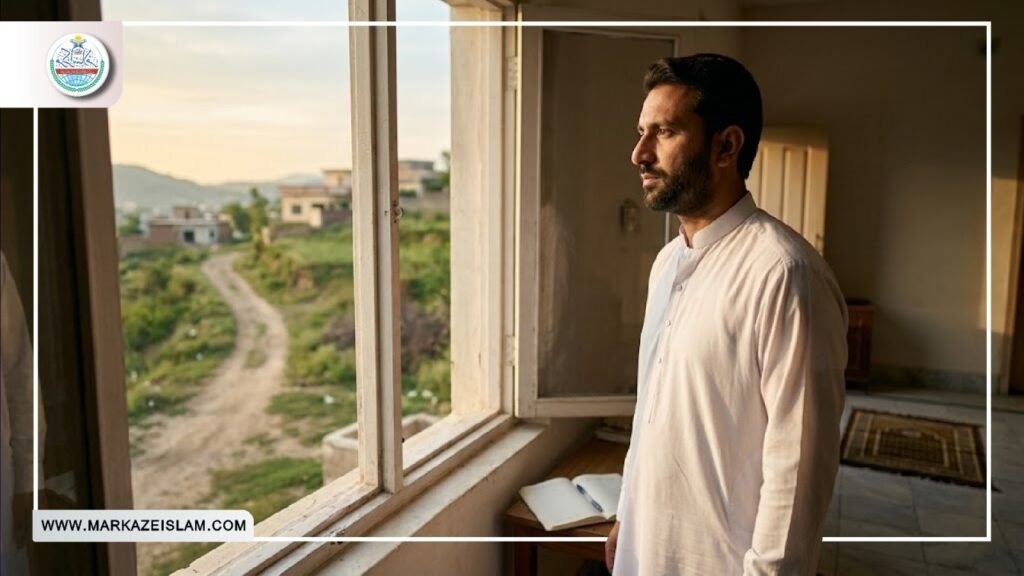
This is the point where the most misconceptions are found, so understand it in a little detail.
٭A dream is not necessary. There is no mention of a dream, colours or any sign in the Hadith of Jabir (RA). The general opinion of the scholars is that, after Istikhara, the real thing is the heart’s inclination and contentment. Move forward in the direction toward which the heart inclines, provided that it is permissible in Shari’ terms. If a dream does come, it is a gift from Allah, but it is not correct to regard it as a necessary result.
٭Recognise inshirah-e-sadr (openness of the heart). If, after the supplication, you feel peace, ease and sharh-e-sadr (expansion of the chest) toward some matter, it is regarded as a good sign. If, on the contrary, restlessness and tension remain, be cautious. However, this is a “sign,” not conclusive proof, so keep reason and consultation with you.
٭What if no clear inclination arises? It is mentioned in the books of fiqh that Istikhara can be repeated up to seven times, and this statement appears in a narration attributed to Hazrat Anas (RA), the chain of which the hadith scholars have criticised; therefore, keep it at the level of virtues and etiquette (fada’il and adab) and do not regard it as a condition. If several days pass and no inclination becomes clear, it is also possible that both paths are permissible and suitable for you. In such a case, decide according to consultation and your best rational opinion, and keep trust in Allah.
٭After deciding, trust. When you have done all three, effort, consultation and Istikhara, move forward and act upon “فَإِذَا عَزَمْتَ فَتَوَكَّلْ عَلَى اللّٰهِ”. If an obstacle comes later, instead of panicking, understand that perhaps Allah, in His wisdom, has turned you away from it. The very words of the supplication are these: “فَاصْرِفْهُ عَنِّي وَاصْرِفْنِي عَنْهُ”. If the heart is overcome by constriction and despair, collective repentance (tawbah), dhikr and istighfar also give support to the heart.
Common Misconceptions About Istikhara

Misconception 1: In Istikhara, seeing white or green in a dream is good and seeing black is bad. There is no authentic evidence for this. It is not correct to derive results from colours and to spread fabricated interpretations of dreams.
Misconception 2: Istikhara is only for one who has knowledge. No, every Muslim can do Istikhara. The Noble Prophet ﷺ taught it to the ordinary Companions.
Misconception 3: Istikhara is done to find out about bandish (binding spell) or magic. The subject of Istikhara is seeking good in doing or not doing some lawful matter. If someone truly feels a spiritual affliction, there is the path of Shar’i ruqyah and supplication; for that, read What Is Faith Healing? (Dam and Ruqyah).
Misconception 4: Having someone else do Istikhara for you online or over the phone is enough. In the hadith, Istikhara is described for the person who is faced with the matter, and in the opinion of most scholars it is better that a person do his own Istikhara. There is no harm in requesting a righteous person to make supplication for you, but do not make that a substitute for your own Istikhara.
Misconception 5: Istikhara once is enough and after that there is no need for consultation. The correct method is the combination of all three: consultation, Istikhara and resolve.
Misconception 6: If the matter became difficult even after Istikhara, then Istikhara has failed. This is not so. Sometimes good passes even through a difficult path. Recall here again the same verse of Surah al-Baqarah that we read at the beginning.
Frequently Asked Questions About Istikhara (FAQ)
Question 1: Is prayer necessary for Istikhara, or is supplication alone sufficient?
The Sunnah method is precisely that two rak’at of nafl be prayed first and then the supplication be made. If there is a Shar’i excuse, for example if a woman is in her days of menstruation (ayyam-e-makhsusah, literally “the special days”), the scholars say that the supplication of Istikhara alone may be recited without the prayer.
Question 2: How many times should Istikhara be done?
The Hadith of Jabir (RA) does not mention a number. Praying it once is also sufficient, and if the inclination in the heart is not clear, it may be repeated. Along with this, also remember that instead of repeating Istikhara again and again, pay attention to consultation and research as well.
Question 3: How should one do Istikhara if there are several marriage proposals?
In a fatwa of Dar al-Ifta al-Misriyyah (Egypt’s Dar al-Ifta), this guidance is found: choose the proposal that is better in your opinion and do Istikhara for it, and if you cannot give preference, do a separate Istikhara for each one. Along with this, keep the consultation of parents and elders included as well.
Question 4: What should one do if the supplication is not memorised in Arabic?
First try to memorise it, because these are the Masnoon words. Until it is memorised, recite it by looking at it, or make the supplication along with the Urdu translation. Allah looks at the intention and the sincerity of the heart.
Question 5: Is Istikhara for confirming a decision already in one’s mind?
No. Istikhara is so that we may subordinate our own desire to Allah’s decision. Even if there is an inclination, say with an open heart in the supplication that whatever is better, let that be.
Question 6: Can Istikhara be done to find out the cause of an obstacle in business or a job?
Istikhara is for “doing or not doing.” It is not a means of searching for the cause of an obstacle. In such a case, reflect on the causes, consult experts, and pay attention to the Masnoon supplications for blessing in provision (rizq), for which you can see Wazifa for Blessing in Sustenance (Rizq).
The Decision Is Ours, and the Counsel Is from Allah.
Istikhara teaches us that a Muslim neither makes a decision without thinking nor carries the entire burden of the decision on his own shoulders. He makes his effort, takes counsel from people of knowledge and experience, and then, through two rak’at of prayer and supplication, entrusts his matter to the Lord who is fully aware of the outcome. Moving forward with peace and trust instead of wasting away in worry about the result: this is the essence of Istikhara.
If you want guidance in a personal matter, or you have difficulty understanding the method of Istikhara, you can contact Markaz-e-Islam. May Allah the Almighty grant all of us the grace to make better decisions in every matter. Ameen.
Further Reading
Peace and Restlessness: The Truth About Man’s Inner World
Wazifa for Blessing in Sustenance (Rizq)
What Is the Difference Between Amaliyat and Magic?
The Beautiful Names of Allah (Asma-ul-Husna) (Part One)
References
Sahih al-Bukhari, Kitab al-Tahajjud, Hadith of Jabir ibn Abdullah (may Allah be pleased with them both) (the Istikhara prayer and supplication)
The Noble Quran: Surah al-Baqarah, verse 216; Surah Aal-e-Imran, verse 159
Radd al-Muhtar (Shami), Kitab al-Salah, chapter “Rak’atay al-Istikharah” (the two rak’at of Istikhara)
Dar al-Ifta al-Misriyyah: The Method of the Istikhara Prayer and Its Outcomes