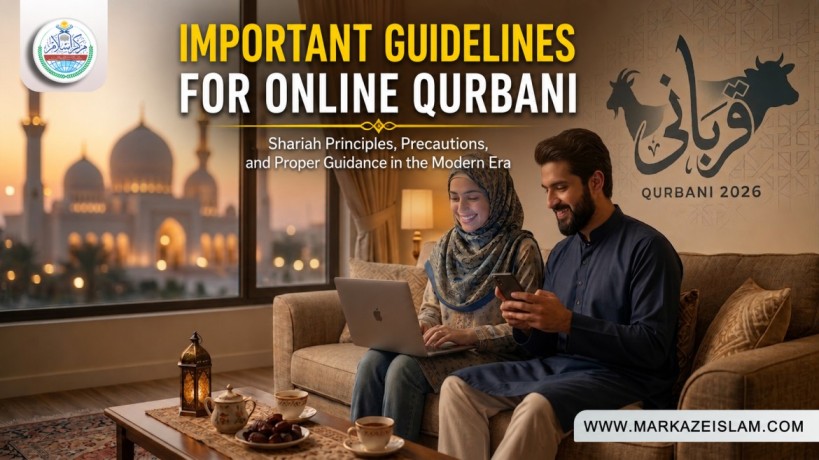
Shariah Principles, Precautions, and Proper Guidance in the Modern Era
Eid al-Adha is not merely a festival; rather, it is a remembrance of the عظیم sacrifice, obedience, and complete submission to the Will of Allah demonstrated by Prophet Ibrahim and Prophet Ismail. In Islam, Qurbani is an important act of worship whose purpose is not simply the slaughtering of an animal, but the expression of piety, sincerity, and obedience to Allah Almighty. Allah Almighty says in the Holy Qur’an:
Table of Contents
“Neither their meat reaches Allah nor their blood, but what reaches Him is your piety.”
(Surah Al-Hajj: 37)
In today’s modern age, due to busy lifestyles, overseas residence, and digital conveniences, the trend of “online Qurbani” is rapidly increasing. Many people perform their Qurbani through different Islamic charitable organizations, madrasas, and welfare institutions. However, along with this, many questions also arise: Is online Qurbani permissible? What precautions should be kept in mind? And how can a Muslim perform this act of worship correctly?
This blog contains these important questions and essential guidelines so that you may perform your Qurbani according to Shariah with peace of mind and confidence.
What Is Online Qurbani?
Online Qurbani means that a person pays the amount for Qurbani through the internet, a website, a mobile application, or an Islamic organization, and that organization slaughters the animal on the person’s behalf during the prescribed days.

In reality, this is a modern form of “Wakalah” (authorization/representation). Just as people in earlier times appointed a relative, friend, or trustworthy person as their representative for Qurbani, similarly today reliable institutions perform this responsibility.
Is Online Qurbani Permissible?
Yes, if the Qurbani is carried out according to all Islamic principles, then online Qurbani is permissible. According to the respected jurists, appointing another person or institution as a representative for Qurbani is valid.
It is narrated from Ali ibn Abi Talib that:
“The Noble Prophet ﷺ instructed me to supervise the sacrificial animals.”
(Sahih Muslim: 1317)
This Hadith shows that representation in Qurbani is permissible, provided that all Shariah requirements are fulfilled.
Shariah Principles of Online Qurbani
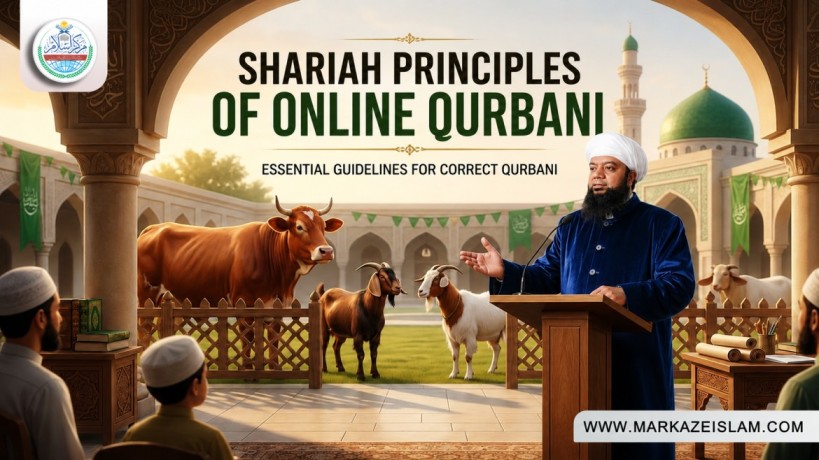
Essential Guidelines for Correct Qurbani
Choosing a Reliable Organization
The most important thing is that the institution through which the Qurbani is being performed should be trustworthy. Select an organization:
- That has a good reputation
- That works in a transparent manner
- That provides pictures or videos of the Qurbani
- That follows Islamic principles
- About which people have positive feedback and experiences
The Shariah-Required Age and Health of the Animal
The sacrificial animal must meet the standards prescribed by Shariah. It is mentioned in the blessed Hadith:
“Do not sacrifice except a mature animal.”
(Sahih Muslim: 1963)
Generally:
- Goat / Sheep = At least one year old
- Cow / Buffalo = Two years old
- Camel = Five years old
Likewise, the animal should be healthy and free from any major defect.
The Correct Time for Qurbani
The time for Qurbani begins after the Eid al-Adha prayer and remains until sunset on the 12th of Dhul-Hijjah.
The Messenger of Allah ﷺ said:
“Whoever slaughtered before the prayer, it is only meat and not Qurbani.”
(Sahih Bukhari: 5545)
Therefore, in online Qurbani as well, it is necessary to confirm that the sacrifice is performed during the prescribed days and within the correct time.
Online Qurbani for Muslims Living Abroad
Today, millions of Muslims live abroad and arrange their Qurbani in countries such as Pakistan, India, Bangladesh, or African nations. This practice is permissible because, in Islam, the real importance lies in the correct method of Qurbani, not in the location where it is performed.
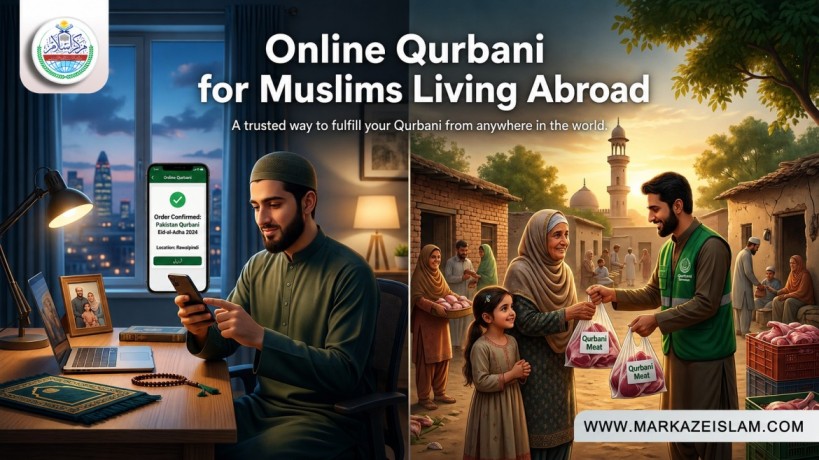
Many people arrange Qurbani in poverty-stricken areas so that needy individuals there may also benefit from the meat. From the perspective of continuous charity and social service, this practice is also highly valuable.
Is Intention Necessary for Qurbani?
Yes, Qurbani is an act of worship, and intention holds a fundamental position in every act of worship.
The Messenger of Allah ﷺ said:
“Actions are judged by intentions.”
(Sahih Bukhari: 1)
Therefore, while performing online Qurbani, it is necessary to make the intention sincerely for the sake and pleasure of Allah Almighty.
Is It Necessary to Receive a Video or Picture of the Qurbani?
From a Shariah perspective, it is not necessary, but in today’s age it is considered a better method for transparency and trust. Many organizations provide pictures, videos, or confirmation messages of the Qurbani so that the person offering the sacrifice can feel reassured and satisfied.
Who Receives the Meat of Qurbani?
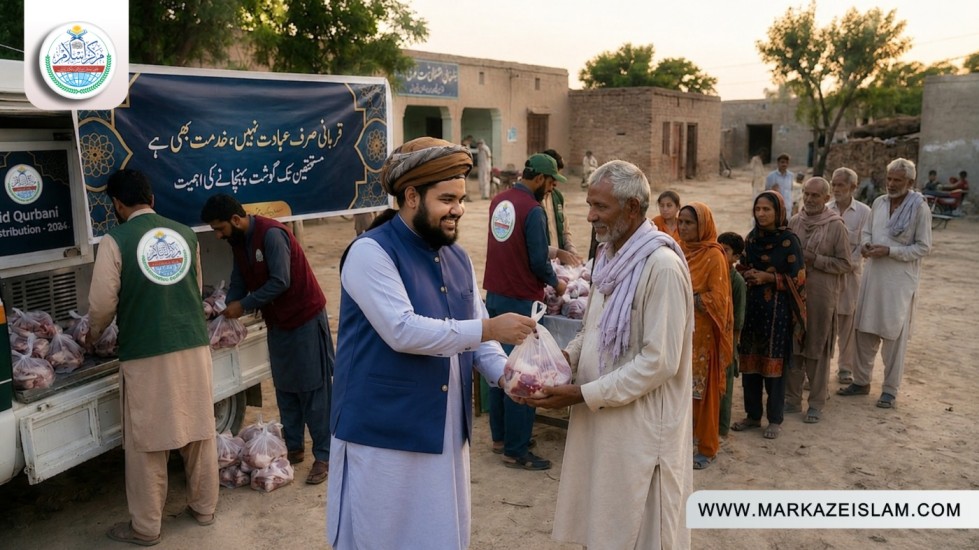
In Islam, Qurbani is not only a personal act of worship but also a means of social welfare. That is why many organizations distribute the meat of Qurbani to:
- Poor families
- Orphans
- Widows
- Underdeveloped and deprived areas
- Refugees and affected communities
Allah Almighty says in the Holy Qur’an:
“So eat from it yourselves and feed the needy and poor.”
(Surah Al-Hajj: 28)
Benefits of Online Qurbani
1. Ease and Convenience
For busy individuals or those living abroad, it is a very convenient option.
2. Saving Time
It reduces the difficulties of purchasing, caring for, and arranging the slaughter of an animal.
3. Reaching the Deserving People
Qurbani meat reaches many remote areas where people may not be able to eat meat throughout the entire year.
4. Collective Welfare
Islamic welfare organizations help thousands of families through Qurbani projects.
Common Mistakes in Online Qurbani
Some people send money to any unknown organization merely because of lower prices, which may lead to the risk of fraud and deception.
Similarly, at times people:
- Do not check the details of the animal
- Do not confirm the timing of the Qurbani
- Do not pay attention to Shariah principles
Such negligence can affect the true purpose and spirit of the worship.
The Real Message of Qurbani
Qurbani is not merely the slaughtering of an animal; rather, it means sacrificing one’s desires, pride, and worldly attachments before the command of Allah Almighty.

When Prophet Ibrahim showed willingness to sacrifice his son for the sake of Allah’s command, Allah Almighty transformed that sincerity into an act of worship for Muslims until the Day of Judgment.
That is why the real purpose of Qurbani is piety, sincerity, love for Allah, and service to humanity.
Conclusion
Online Qurbani is a convenience of the modern era, but the spirit of this worship remains the same as it was in the time of Prophet Ibrahim: seeking the pleasure of Allah Almighty and complete obedience to Him.
If a Muslim selects a trustworthy organization, follows the principles of Shariah, performs Qurbani with sincere intention, and tries to ensure that the meat reaches deserving people, then online Qurbani can also become an excellent and permissible act.
May Allah Almighty accept all of our sacrifices and bless us with sincerity, piety, and correct understanding. Ameen.
Important References
- Holy Qur’an — Surah Al-Hajj, Verses 28 and 37
- Sahih Bukhari — Hadith 1, 5545
- Sahih Muslim — Hadith 1317, 1963
- Sunan Abi Dawud — Kitab al-Adahi
- Fatawa Alamgiri
- Radd al-Muhtar Ala al-Durr al-Mukhtar