A Complete Guide in the Light of Islamic Teachings
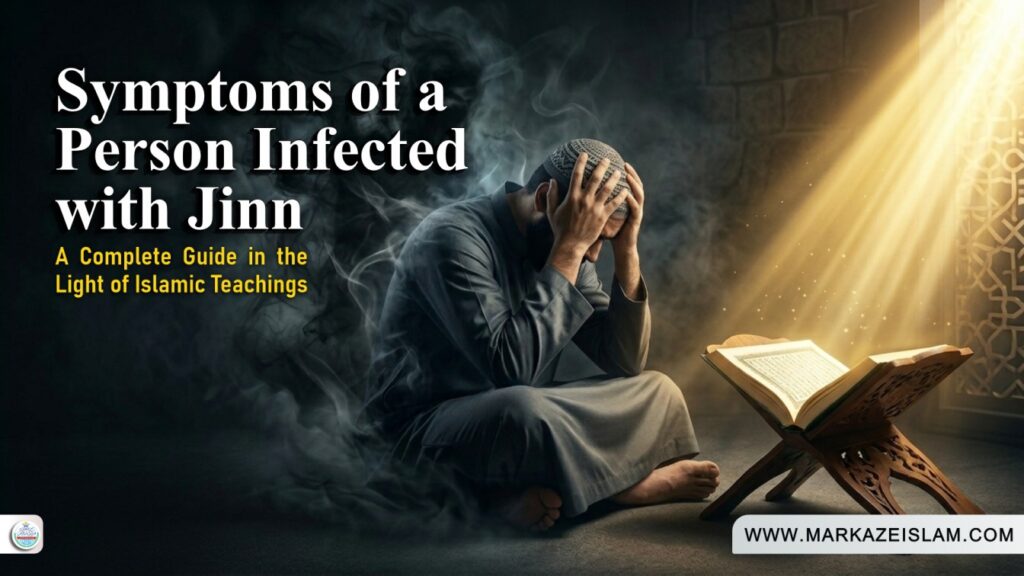
The signs of a person affected by jinn are a topic that has been discussed for centuries. Even today, many people experience various physical, psychological, and spiritual conditions and try to determine whether these conditions are the result of a medical issue or a spiritual influence.
Table of Contents
Islam is a religion of balance. On one hand, the Qur’an and Sunnah affirm the existence of jinn, while on the other hand, they do not permit declaring someone affected by jinn merely on the basis of suspicion, assumptions, or a few apparent symptoms. For this reason, reliable scholars and spiritual practitioners always emphasize investigation, caution, and adherence to Islamic principles.
Some people attribute every illness to the influence of jinn, while others deny the existence of jinn altogether. Neither approach is correct. It is essential for a Muslim to understand this issue in the light of the Qur’an and Sunnah and to avoid both extremes.
In this article, we will discuss in detail the signs of a person affected by jinn, methods of assessment, symptoms that appear during wakefulness and sleep, Qur’anic guidance, and the relevant Islamic principles.
What Are Jinn?
Jinn are a creation of Allah Almighty that remain hidden from human sight. The Noble Qur’an mentions jinn in numerous places.
Allah Almighty says:
﴿وَخَلَقَ الْجَانَّ مِنْ مَارِجٍ مِّنْ نَّارٍ﴾
Translation:
“And He created the jinn from a smokeless flame of fire.”
(Surah Ar-Rahman: 15)
Like human beings, jinn are also morally accountable. Among them are both righteous and wicked individuals, and they too will be held accountable on the Day of Judgment.
Can Jinn Really Influence Human Beings?
A common question is whether jinn can influence human beings.
According to the majority of scholars of Ahl al-Sunnah wa al-Jama‘ah, the Qur’an and Hadith establish that in certain circumstances, jinn may affect human beings. However, it is incorrect to attribute every unusual condition or behavior to jinn.
For this reason, scholars and practitioners emphasize that symptoms, circumstances, and medical factors should first be carefully evaluated.
The Reality of the Symptoms of a Person Infected with Jinn
It is important to understand a fundamental principle here.
Symptoms are not always definitive proof; rather, they serve as indicators that may help in reaching the truth.
The source material provided also highlights the following important points:
- Decisions should not be made solely on the basis of symptoms.
- A patient should never be discouraged from seeking medical treatment.
- Physical and psychological illnesses can sometimes produce similar symptoms.
- In some cases, spiritual and physical conditions may coexist.
This principle forms the foundation of the entire discussion.
Symptoms of a Person Affected by Jinn While Awake
Frequent Seizures and Loss of Awareness
Some individuals experience episodes during which they become unaware of their surroundings. During such episodes, they may say or do things that are inconsistent with their normal personality and behavior.
Manifestation of Unusual Physical Strength
At times, a person may display physical strength far beyond what is normally expected under ordinary circumstances. Spiritual practitioners often regard this as a symptom worthy of attention.
Behavior Resembling Madness
Some individuals do not appear to suffer from a mental disorder according to medical examinations, yet they continue to exhibit highly unusual or irrational behavior.
Screaming, Shouting, or Producing Strange Sounds
Certain individuals suddenly begin screaming, speaking loudly, or communicating in an unusual manner.
Attempts to Harm Themselves or Others
In some cases, a person may attempt to injure themselves or cause harm to others.
Unusual Distress When Hearing the Adhan or the Qur’an
According to the signs mentioned in traditional spiritual literature, some affected individuals may become restless or distressed when listening to the Adhan or the recitation of the Holy Qur’an.
The Qur’an is the speech of Allah Almighty, and its effects manifest differently within the hearts of believers.
The Healing Power of the Holy Qur’an
Allah Almighty says:
﴿وَنُنَزِّلُ مِنَ الْقُرْآنِ مَا هُوَ شِفَاءٌ وَرَحْمَةٌ لِّلْمُؤْمِنِينَ﴾
Translation:
“And We send down in the Qur’an that which is a healing and a mercy for the believers.”
(Surah Al-Isra: 82)
For this reason, the Holy Qur’an occupies a central place in Shar‘i Ruqyah and Islamic spiritual treatment.
Speaking in an Unfamiliar Language or Unusual Manner
Traditional sources also mention that some individuals may speak in a language, accent, or style that differs significantly from their normal way of speaking.
In certain cases, men may speak in a feminine manner, while women may speak in a masculine manner.
Although such signs alone are not sufficient evidence to reach a conclusion, they may be considered alongside other symptoms.
Physical and Psychological Symptoms
Some individuals also report the following complaints:
- Persistent pain in a particular part of the body
- Mental confusion and lack of concentration
- Unusual anxiety and nervousness
- Severe irritability
- Neglect of cleanliness and personal hygiene
These symptoms may also occur in various medical and psychological conditions. Therefore, a proper medical evaluation is essential before drawing any conclusions.
Symptoms of a Person Infected with Jinn during Sleep,
Diagnosis, and Islamic Guidance
Signs of a Person Affected by Jinn During Sleep
Sleep is an extremely sensitive phase of human life during which physical senses become less active, while the mind may become more susceptible to various experiences. During this state, some individuals encounter conditions that spiritual practitioners consider worthy of attention. However, such experiences should never be regarded as conclusive evidence on their own.
Frequent and Frightening Nightmares
Some individuals repeatedly experience dreams involving:
- Being chased by someone or something
- Falling from a great height
- Snakes, dogs, or other frightening scenes
- Suddenly waking up screaming in fear
In some cases, such experiences may also result from psychological stress or emotional pressure. Therefore, they should always be evaluated alongside other symptoms rather than being considered in isolation.
Feeling a Heavy Weight on the Body During Sleep (Sleep Paralysis-Like Condition)
Some people report that:
- They are awake but unable to move their bodies
- They experience difficulty breathing
- They feel pressure on their chest
- They become overwhelmed by intense fear
Modern medicine also recognizes this condition. From a spiritual perspective, however, it may sometimes be examined in conjunction with other symptoms rather than viewed as a standalone indication of spiritual influence.
Talking or Screaming During Sleep
Some individuals, while asleep:
- Utter unclear words
- Suddenly scream
- Appear to be conversing with someone
Such symptoms may also arise from neurological conditions, emotional stress, or psychological factors. Therefore, a comprehensive evaluation is necessary.
Repeated Sleep Disturbances and Restlessness
If a person experiences:
- Frequent interruptions in sleep
- Sudden awakening every night
- Difficulty returning to sleep
then the condition should be examined from both medical and psychological perspectives, not merely from a spiritual standpoint.
Why Is Caution Necessary in Diagnosis?
According to Islamic teachings, one of the fundamental principles is that:
Certainty cannot be removed by mere doubt.
For this reason, it is not correct to declare a person affected by jinn solely on the basis of symptoms.
Important Principles
- A medical examination should be conducted first.
- Mental and psychological illnesses should not be ignored.
- Spiritual treatment should be adopted as a supportive means.
- Hasty or emotionally driven conclusions should be avoided.
Qur’anic Guidance and Protective Supplications
The Holy Qur’an is both a source of healing and protection for the believer.
Ayat al-Kursi (The Greatest Verse for Protection)
اللّٰهُ لَا إِلٰهَ إِلَّا هُوَ الْحَيُّ الْقَيُّومُ ۚ لَا تَأْخُذُهُ سِنَةٌ وَلَا نَوْمٌ ۚ لَهُ مَا فِي السَّمَاوَاتِ وَمَا فِي الْأَرْضِ
Translation:
“Allah—there is no deity except Him, the Ever-Living, the Sustainer of all existence. Neither drowsiness overtakes Him nor sleep. To Him belongs whatever is in the heavens and whatever is on the earth…”
(Surah Al-Baqarah: 255)
The Importance of Surah Al-Baqarah
The Messenger of Allah ﷺ said:
“Do not turn your houses into graveyards. Indeed, Satan flees from the house in which Surah Al-Baqarah is recited.”
(Sahih Muslim)
This Hadith highlights the spiritual significance of reciting Surah Al-Baqarah within the home as a means of protection.
Shar‘i Ruqyah (Islamic Spiritual Treatment)

Shar‘i Ruqyah refers to spiritual treatment performed in accordance with the Qur’an and Sunnah.
Fundamental Principles of Shar‘i Ruqyah
- Recitation of verses from the Holy Qur’an
- Authentic supplications taught by the Prophet ﷺ
- Methods free from all forms of shirk (associating partners with Allah)
- Complete trust and reliance upon Allah Almighty
Commonly Recited Chapters and Verses
- Surah Al-Fatihah
- Ayat al-Kursi
- Surah Al-Ikhlas
- Surah Al-Falaq
- Surah An-Nas
These are among the most commonly recited portions of the Qur’an in Islamic spiritual treatment and protection.
Practical Guidance for an Affected Individual
If a person experiences such symptoms, the following measures are recommended:
Establish Regular Prayer
Performing the five daily prayers consistently is one of the greatest means of spiritual strength and protection.
Morning and Evening Adhkar
Regular recitation of:
- Ayat al-Kursi
- Al-Mu‘awwidhatayn (Surah Al-Falaq and Surah An-Nas)
- Seeking forgiveness (Istighfar)
can provide spiritual comfort and protection.
Avoiding Sin
Spiritual weakness often increases through heedlessness and sinful behavior. Strengthening one’s relationship with Allah is therefore essential.
Consult Qualified Medical and Spiritual Experts
It is important to address both the medical and spiritual aspects of a condition. Seeking help from trustworthy physicians and knowledgeable spiritual practitioners ensures a balanced and responsible approach.
Frequently Asked Questions (FAQs)
Question 1: Can Jinn Really Influence Human Beings?
According to Islamic teachings, the existence of jinn is established through the Qur’an and Sunnah, and under certain circumstances they may influence human beings. However, it is incorrect to attribute every illness, emotional struggle, or psychological condition to the influence of jinn. Medical and psychological factors should always be examined first, after which spiritual aspects may be considered where appropriate.
Question 2: What Are the Most Common Signs of a Person Affected by Jinn?
Some commonly mentioned signs include:
- Repeated fainting spells or seizures
- Severe anxiety and fear
- Unusual sounds or abnormal patterns of speech
- Distress upon hearing the Qur’an or the Adhan
- Frightening dreams and sleep disturbances
However, these symptoms may also occur in various physical, neurological, or psychological illnesses. Therefore, a final judgment should never be based solely on symptoms.
Question 3: Can Nightmares Be a Sign of Jinn Influence?
Recurring nightmares may sometimes be considered part of a spiritual condition, but they can also result from stress, anxiety, emotional pressure, or psychological difficulties. For this reason, dreams alone are not considered sufficient evidence. The individual’s overall condition must be assessed comprehensively.
Question 4: What Causes the Feeling of Heaviness During Sleep?
This condition is commonly known as sleep paralysis. It is a medically recognized phenomenon in which a person becomes conscious but is temporarily unable to move. Some spiritual practitioners may occasionally examine it alongside other possible spiritual symptoms, but every case should be evaluated individually and responsibly.
Question 5: Can the Recitation of the Qur’an Remove the Effects of Jinn?
Yes. The Holy Qur’an has been described as a source of healing and mercy. Verses and chapters such as Ayat al-Kursi, Surah Al-Falaq, and Surah An-Nas are widely regarded as powerful means of spiritual protection. However, along with recitation, reliance upon Allah, sincere faith, and practical self-improvement are also essential.
Question 6: Is Spiritual Treatment Alone Sufficient?
No. Islam is a religion of balance and moderation. If a person is suffering from a physical or psychological illness, medical treatment should be sought first. Spiritual treatment serves as a complementary means that can provide inner peace, comfort, and spiritual strength.
Question 7: Does Every Unusual Behavior Indicate the Presence of Jinn?
No. Unusual behavior does not automatically indicate the influence of jinn. Such behavior may result from emotional stress, neurological conditions, psychological disorders, or physical illnesses. Therefore, making quick assumptions without proper evaluation is neither wise nor consistent with Islamic teachings.
Question 8: What Is the Most Effective Way to Protect Oneself from Jinn?
Among the most effective means of protection are:
- Performing the five daily prayers regularly
- Reciting the morning and evening Adhkar
- Reciting Ayat al-Kursi
- Reciting Surah Al-Falaq and Surah An-Nas
- Avoiding sins and engaging in repentance and seeking forgiveness
These practices strengthen a believer spiritually and help maintain a close connection with Allah Almighty.
Question 9: Does Surah Al-Baqarah Really Provide Protection?
Yes. An authentic Hadith states that Satan flees from a house in which Surah Al-Baqarah is recited. For this reason, its recitation is considered highly beneficial for spiritual protection and blessings within the home.
Question 10: Do Jinn Affect Only Weak People?
No. There is no definitive Islamic principle stating that only weak individuals are affected. However, faith, worship, remembrance of Allah, and spiritual strength help protect a person from fear, doubts, and harmful influences. Weakness is often associated with spiritual negligence and distance from acts of obedience.
Conclusion
When the subject of the signs of a person affected by jinn is viewed as a whole, it becomes clear that Islam provides an exceptionally balanced and wise approach to this issue. Neither can every unusual condition be immediately attributed to jinn, nor can the existence of jinn be denied altogether.
In the light of the Qur’an and Sunnah, it is established that jinn are among the creations of Allah Almighty, hidden from human sight, and that, by Allah’s permission, they may at times influence human beings. Nevertheless, Islamic law teaches us that no conclusion should be reached through haste, speculation, or reliance upon symptoms alone.
Several important principles emerge from this discussion:
- Symptoms observed during wakefulness, such as loss of consciousness, unusual behavior, or excessive screaming, are not necessarily evidence of jinn influence. They may also result from medical or psychological conditions.
- Conditions experienced during sleep, including nightmares, sleep paralysis-like episodes, and persistent restlessness, may often be linked to stress, psychological pressure, or physical weakness.
- The most important principle in diagnosis is to conduct a proper medical evaluation first and then consider any possible spiritual aspects.
- The Holy Qur’an remains the greatest source of healing, tranquility, and protection for the believer, especially through the recitation of Ayat al-Kursi, Surah Al-Falaq, and Surah An-Nas.
- Shar‘i Ruqyah is a permissible and Sunnah-based method of treatment, but it should always remain within the boundaries of the Qur’an and Sunnah.
- Most importantly, faith, regular prayer, remembrance of Allah, and avoiding sin strengthen a person spiritually and provide protection from fears, whispers, and harmful influences.
Ultimately, it is essential to understand that Islam teaches balance. It is neither correct to fearfully attribute every matter to supernatural causes nor to reject spiritual realities altogether. A conscious and knowledgeable Muslim is one who approaches every issue with reason, knowledge, adherence to Shariah, and moderation.
If a person strengthens his relationship with the Qur’an, remains steadfast in prayer, makes the morning and evening remembrances a regular part of daily life, and strives to avoid sin, he becomes stronger not only spiritually but also mentally and emotionally.
This is the essence and central message of the entire discussion: true protection lies in the remembrance of Allah Almighty, obedience to Him, and complete trust in Him alone.