
Asma ul-Husna The Virtues, Meanings, and Correct Method of Dhikr of the 99 Names of Allah
‘Part One’
Allah the Exalted has made His names a path to knowing Him in the Holy Quran. When we say “Ya Razzaq” (O Provider) in a time of hardship, or call “Ya Ghaffar” (O Oft-Forgiving) after a sin, we are in fact calling upon Allah the Exalted by the very names He Himself has told us. These are the Asma ul-Husna. The same principle was at work in our earlier article A Wazifa for Barakah in Provision: calling upon Allah by His names when asking, and placing trust (tawakkul) in Him. What the reality of tawakkul is, we have already explained in detail in “What Is Tawakkul?”.
Table of Contents
In this article we will look, in order, at: what the Asma ul-Husna are, the true meaning of the hadith of the ninety-nine names, what is meant by the Ism-e-A‘zam (the Greatest Name), the etiquette of supplication and dhikr, and a few practices reported from the pious elders — which must be understood separately from what is established by hadith.
What Are the Asma ul-Husna?
“Asma” is the plural of ism, meaning “name,” and “al-Husna” means the best and most beautiful. In the Holy Quran, the names of Allah the Exalted are called “Asma ul-Husna,” that is, names that stand at the very highest degree of beauty and perfection.
Imam Fakhr ad-Din ar-Razi (may Allah have mercy on him) has given three reasons for calling these names “Husna.”
٭The Perfection of the Essence: The blessed Essence of Allah the Exalted is the highest and is free of every defect. An essence is known only through its names.
٭The Manifestation of the Attributes: These names contain the declaration of Allah the Exalted’s oneness, majesty and honor, benevolence, mercy and kindness, and His being without equal. Every name bears witness that He alone is Rahman and also Rahim, Creator and also One (Wahid).
٭Freedom from Partnership: Through these names Allah the Exalted has revealed attributes worthy of praise, in which no one is His partner.
The Quranic Command Regarding the Asma ul-Husna
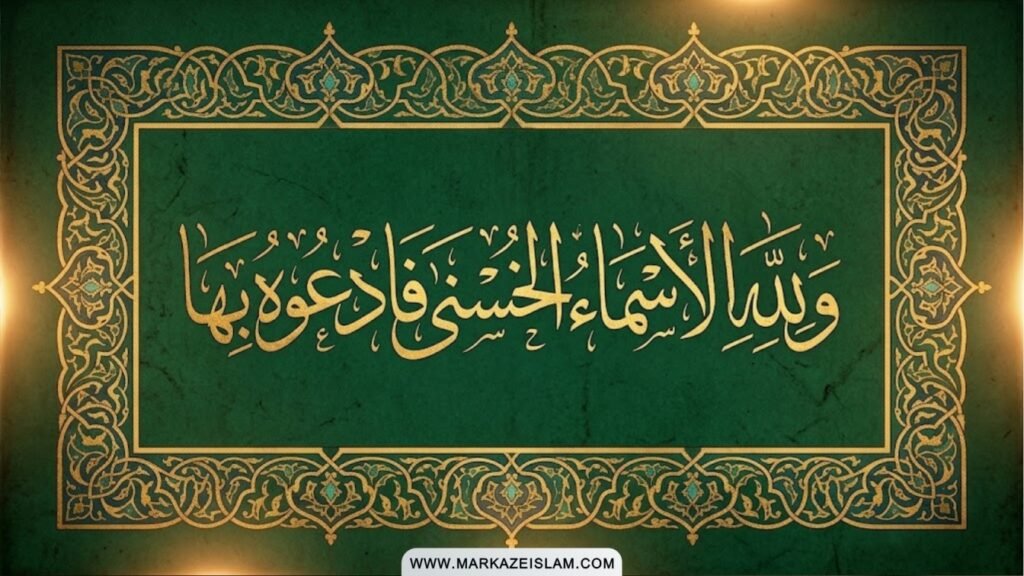
The most explicit command is in Surah al-A‘raf.
(Al-A‘raf: 180)
Translation: And to Allah belong the best names, so call upon Him by them, and leave those who deviate concerning His names.
Three things emerge from this verse: the names of Allah are beautiful, there is a command to supplicate by these very names, and deviation concerning the names is forbidden. We have already given a complete account of the etiquette of supplication in “Etiquette of Du‘a”, and as was stated there, the same etiquette applies here as well to supplication with the Names.
In Surah al-Isra (110) He said: “Call upon [Him as] Allah or call upon [Him as] Rahman — whichever name you call Him by, all the best names belong to Him.” And in Surah al-Hashr (24) three names are mentioned together: الْخَالِقُ الْبَارِئُ الْمُصَوِّرُ (Al-Khaliq, Al-Bari’, Al-Musawwir).
The Hadith of the Ninety-Nine Names
It is narrated from Abu Hurairah (may Allah be pleased with him) that the Prophet ﷺ said:
إِنَّ لِلَّهِ تِسْعَةً وَتِسْعِينَ اسْمًا، مِائَةً إِلَّا وَاحِدًا، مَنْ أَحْصَاهَا دَخَلَ الْجَنَّةَ
(Bukhari, Muslim)
Translation: Indeed, Allah has ninety-nine names, one less than a hundred; whoever “has preserved” them will enter Paradise.
What Does “Ihsa’” Mean?
The scholars have explained it in three levels.
٭Memorizing the words: Counting the names, memorizing them, and keeping them going on the tongue.
٭Understanding the meaning and requirements: Knowing the meaning of each name and reflecting on these attributes.
Shaping one’s life according to them and supplicating by them.
One who recites “Ar-Razzaq” and holds firm belief in his heart that it is Allah alone who gives provision will avoid unlawful earnings. One who recites “Al-Ghaffar” will move toward repentance. The recitation (wird) of a Name gives its full benefit only when the color of its attribute can also be seen in one’s life.
Are the Names of Allah Only Ninety-Nine?

Many people think that these ninety-nine are the only names Allah has. This is not correct. The meaning of this hadith is not that the number of names ends at ninety-nine; rather, it is that doing “ihsa’” of these ninety-nine is a cause of entering Paradise. In support of this there are a few points.
٭Several names in the Quran are not found in the commonly known list, for example Ar-Rabb, Al-Mawla, An-Nasir.
٭In the ahadith too, names such as Al-Hannan, Al-Mannan, and Al-Jamil appear.
٭The words of the Prophet’s ﷺ masnun supplication are: “O Allah! I ask You by every name of Yours by which You have named Yourself, or revealed in Your Book, or taught to any of Your creation, or kept exclusively with Yourself in the knowledge of the unseen” (Musnad Ahmad).
The well-known list of ninety-nine generally appears in a narration in Jami‘ at-Tirmidhi. In the view of a large group of muhaddithin (hadith scholars), this detailed list is not established from the Prophet ﷺ himself but has come through a narrator. Therefore, do not insist on any one list in such a way that the remaining names are negated, and use every name in the same sense that the Shariah has given it.
Etiquette of Supplication and Dhikr with the Names
The conditions that the elders have written regarding dhikr and supplication with the Asma ul-Husna are summarized as follows.
٭Ikhlas (sincerity): Let the intention be to seek the pleasure of Allah, not merely a worldly aim.
٭Keeping the meaning present in the mind (istihdar): While reciting, have the meaning of the Name in the heart.
٭Being in a state of wudu and facing the Qiblah.
٭Supplicating with humility and earnest entreaty.
٭Striving and adopting lawful means.
٭Placing trust in His grace.
Durood Sharif should be recited at the beginning and end of every practice (ma‘mul), and rather than starting any practice alone, it should be done under authentic guidance. For any new need, such as a difficulty in marriage, it is also a Sunnah to perform Istikhara first — its complete method has been explained by us in “How to Perform Istikhara”.
What Is the Ism-e-A‘zam?

Among the words that the ahadith have described as the “Ism-e-A‘zam” (the Greatest Name), a few are the following.
٭The supplication of a Companion (Abu Dawud, Tirmidhi).
اللَّهُمَّ إِنِّي أَسْأَلُكَ بِأَنَّكَ أَنْتَ اللَّهُ لَا إِلَهَ إِلَّا أَنْتَ الْأَحَدُ الصَّمَدُ الَّذِي لَمْ يَلِدْ وَلَمْ يُولَدْ وَلَمْ يَكُنْ لَهُ كُفُوًا أَحَدٌ
The Prophet ﷺ said: He asked Allah by His Greatest Name, by which, if one asks, He gives.
٭The supplication of Yunus, peace be upon him (Tirmidhi, Mustadrak al-Hakim)
لَا إِلَهَ إِلَّا أَنتَ سُبْحَانَكَ إِنِّي كُنتُ مِنَ الظَّالِمِينَ
(Al-Anbiya: 87)
٭“Ya Hayyu ya Qayyum”: It is mentioned as the Ism-e-A‘zam in the Sunan Arba‘a (the four books of Sunan). The Ayat al-Kursi of Surah al-Baqarah and the opening verses of Surah Aal-e-Imran have also been described as the Ism-e-A‘zam. We have already written a separate article on the complete virtues and special properties (khawass) of Ayat al-Kursi, “The Secret of Ayat al-Kursi”, which is a link in this same protective series.
٭The narration of Anas (may Allah be pleased with him) (Tirmidhi): When the Prophet ﷺ was in any distress, he would say:
يَا حَيُّ يَا قَيُّومُ بِرَحْمَتِكَ أَسْتَغِيثُ.
٭“Ya Arham ar-Rahimin”: There is a narration in Mustadrak al-Hakim that whoever says this phrase three times, an angel says to him: “Ask! Indeed, the Most Merciful of the merciful has turned toward you.”
It should be noted that most of the narrations point to one and the same reality: the real secret of the acceptance of supplication lies in asking, by the names of Allah, with tawhid (oneness of God), humility, and sincerity.
What to Recite When a Supplication Is Accepted
According to a narration in Mustadrak al-Hakim, when the acceptance of a supplication becomes apparent, these words are to be recited.
الْحَمْدُ لِلَّهِ الَّذِي بِعِزَّتِهِ وَجَلَالِهِ تَتِمُّ الصَّالِحَاتُ
Benefits of the Asma ul-Husna

Hazrat Akhundzada Saifur Rahman Mubarakpuri and Khurasani, of the illustrious Saifiyyah spiritual lineage (Silsila-e-‘Aaliyah Saifiyyah), while explaining the Asma ul-Husna in his gatherings, states:
The Personal Name (Ism-e-Dhat): Allah
Whoever performs the dhikr of the personal name (Ism-e-Dhat) “Allah” one thousand times daily, Allah the Exalted grants him perfection of certainty.
And whoever, on Friday before the Friday prayer, having made himself pure and clean, recites “Allah” two hundred times in solitude, even the most difficult task becomes easy for him.
Similarly, if there is a patient such that the physicians have become helpless in his treatment, then upon him, the personal name (Ism-e-Dhat) “”
| Blessed Name | Meaning | Reported Practice (Ma‘mul) | Purpose |
| الرَّحْمٰن Ar-Rahman | Very Merciful | After every prayer, 100 times | Deliverance from heedlessness and forgetfulness of the heart; protection from undesirable matters |
| الرَّحِيم Ar-Rahim | Extremely Compassionate | Daily, 100 times | Tenderness and compassion in the heart; protection from unpleasant matters |
| الْمَلِك Al-Malik | King, Owner | At the time of zawal (when the sun passes its zenith), 120 times | Purity of the heart and outward or inward ghina (self-sufficiency/richness) |
| الْقُدُّوس Al-Quddus | Pure and Exalted above all imperfection | After Jumu‘ah (Friday), 185 times | Protection from calamities and the ability (tawfiq) to worship |
| السَّلَام As-Salam | Giver of safety (peace) | At the patient’s bedside, 136 times | Supplication for healing and safety |
| الْمُؤْمِن Al-Mu’min | Giver of security | At the time of fear, 36 times | Security, strength, and faith (iman) |
| الْمُهَيْمِن Al-Muhaymin | Guardian and Protector | After ghusl (the full bath), two rak‘ahs of nafl prayer, then 100 times | High aspiration and courage |
| الْعَزِيز Al-‘Aziz | Mighty and Possessor of honor | 40 days, 41 times daily | Outward and inward ghina and honor |
| الْجَبَّار Al-Jabbar | Possessor of mighty authority | Morning and evening, 216 times | Protection from the evil of oppressors |
| الْمُتَكَبِّر Al-Mutakabbir | Possessor of greatness | Dhikr in abundance; 10 times before the wedding night | Eminence and blessing; reported for a male child |
| الْخَالِق Al-Khaliq | Creator (the One who creates) | 7 days, 100 times daily | Protection from calamities |
| اَلْبَارِیْ اَلْمُصَوِّر Al-Bari’ Al-Musawwir | Giver of form | Fasting for 7 days; 21 times after iftar | Reported for conception and children |
| الْغَفَّار Al-Ghaffar | Oft-Forgiving | After Jumu‘ah (Friday), 100 times | Reported for relief from hardship and for expansion of provision |
| الْقَهَّار Al-Qahhar | Overpowering over all | Dhikr in abundance | Lessening of love for the world; victory over enemies |
| الْوَهَّاب Al-Wahhab | Bestower of abundant gifts | In the last prostration of the Chasht (Duha) prayer, 14 times | Ghina, acceptance (qabuliyyat), awe and eminence |
| الرَّزَّاق Ar-Razzaq | Giver of provision | Before Fajr, in the corners of the house, 10 times each (10, 10 times) | Expansion in provision |
| الْفَتَّاح Al-Fattah | Giver of openness | After Fajr, placing the hand on the chest, 70 times | Ease in affairs; purity and radiance (nuraniyyat) of the heart |
| الْعَلِيم Al-‘Alim | Knower of everything | In abundance and with constancy | Disclosure of realities and spiritual knowledge (ma‘arif), and strength of memory |
| الْقَابِض Al-Qabid | The Withholder (the One who holds back) | 40 days, writing it on a morsel of bread and eating it | Protection from the pain of hunger |
| الْبَاسِط Al-Basit | Giver of expansion | After Chasht (Duha), 10 times | Abundance in provision |
| الْخَافِض Al-Khafid | The One who lowers | 500 times | Reported for the fulfilment of a need |
| الرَّافِع Ar-Rafi‘ | The One who raises | 70 times | Safety from oppressors |
| الْمُعِزّ Al-Mu‘izz | Giver of honor | Night of Monday and Friday, after Maghrib, 40 times | Awe and honor in hearts |
| الْمُذِلّ Al-Mudhill | Giver of humiliation | 75 times, then supplication | Protection from the envy of the envious; recovery of one’s right |
| السَّمِيع As-Sami‘ | All-Hearing | Thursday, after Chasht (Duha), 500 times | Reported for the acceptance of supplication |
| الْبَصِير Al-Basir | All-Seeing | After Jumu‘ah (Friday), 100 times | Insight and the ability (tawfiq) to do righteous deeds |
| الْحَكَم Al-Hakam | The Judge (the One who decides) | At midnight, in a state of wudu, with presence of heart | Reported for making the heart a seat (abode) of secrets |
| الْعَدْل Al-‘Adl | The Just (the One who does justice) | Night of Friday, writing it on pieces of bread and eating them | Reported for influence and acceptance in hearts |
| اللَّطِيف Al-Latif | Extremely Kind and Subtle | 133 times | Expansion in provision and ease in affairs |
| الْخَبِير Al-Khabir | All-Aware | 7 days, in abundance | Reported for knowledge of hidden matters and deliverance from difficulty |
| الْحَلِيم Al-Halim | Forbearing | Dhikr in abundance | Stability in leadership; reported for blessing in one’s profession and goods |
| الْعَظِيم Al-‘Azim | Possessor of magnificence | Dhikr in abundance | Reported for honor and healing |
| الْغَفُور Al-Ghafur | Oft-Forgiving | For a person with fever, writing it 3 times and tying it on | Reported for the removal of fever |
| الشَّكُور Ash-Shakur | Appreciative (Grateful), | Writing it and passing it over the body | Reported for benefit in hardship, fatigue, and weakness |
| الْعَلِيّ Al-‘Ali | High and Exalted | Writing it and tying it on a child; a traveler should keep it with him | Reported for a child’s growth, for travel, and for need |
| الْكَبِير Al-Kabir | Very Great | Dhikr in abundance | Expansion in knowledge and gnosis (ma‘rifah); reported for affection between spouses |
| الْحَفِيظ Al-Hafiz | Protector (the One who protects) | Dhikr, or writing it and keeping it on oneself | Protection from fear and calamities |
| الْمُقِيت Al-Muqit | Giver of strength (Sustainer) | A traveler should recite it 7 times over water and drink it | Reported for strength and nourishment, and for protection from the dread of travel |
| الْحَسِيب Al-Hasib | The One who takes account, | 7 days, 20 times before sunrise and after Maghrib | Peace of mind in the fear of an account or a matter |
| الْجَلِيل Al-Jalil | Eminent and Majestic | Dhikr, or writing it with musk and saffron and keeping it on oneself | Increase in standing and rank |
| الْكَرِيم Al-Karim | Possessor of abundant generosity | In abundance when going to sleep | Respect and honor in people’s hearts |
| الرَّقِيب Ar-Raqib | Watchful Guardian | Dhikr in abundance; 7 times in need or fear | Protection of wealth and family; reported for a lost item |
| الْمُجِيب Al-Mujib | The One who accepts supplication | Dhikr along with supplication | Reported for the acceptance of supplication |
| الْوَاسِع Al-Wasi‘ | Possessor of vastness | Dhikr in abundance | Outward and inward ghina; largeness of heart and forbearance |
| الْحَكِيم Al-Hakim | Possessor of wisdom | Dhikr in abundance | Deliverance from afflictions and expansion in knowledge and wisdom |
| الْوَدُود Al-Wadud | The One who shows love | Reciting it 1000 times over food | Reported for affection between spouses |
| الْمَجِيد Al-Majid | Glorious and Possessor of majd (glory) | In abundance, along with the fasts of the Ayyam al-Bid (White Days) | Reported for healing from illness |
| الْبَاعِث Al-Ba‘ith | The One who raises up | At bedtime, placing the hand on the chest, 100 times | Reported for illuminating the heart with knowledge and wisdom |
A Simple and Balanced Daily Routine
٭Begin with Durood Sharif.
٭Perform the dhikr of the personal name “Allah.”
٭Choose one name according to your need: “Ya Razzaq” for provision, “Ya Ghaffar” for repentance, “Ya Hayyu ya Qayyum” for distress.
٭Reflect on its meaning.
٭At the end, recite Durood Sharif and ask for your need with humility.
In the case of the evil eye or any fear, along with the Names, also make a point of reciting the Mu‘awwidhatayn (the last two surahs of the Quran) — we have already given the details of this in “Signs of the Evil Eye”. And the protective routine that is essential at night is connected to the night prayer (qiyam) described in “The Secret of Surah al-Muzzammil”.
Common Mistakes to Avoid
٭Reciting the Names only for a worldly purpose; the real aim is knowing Allah (ma‘rifah) and His pleasure.
٭Thinking that the effect will disappear if the count is reduced.
٭Considering the Name itself to be effective; the effect is by the command of Allah.
٭Making up names on one’s own.
٭Starting lengthy practices (amaliyyat) without guidance.
٭Relying only on the wazifa during illness — do not abandon treatment.
Frequently Asked Questions (FAQ)
٭Are the names of Allah only ninety-nine?
No. The hadith mentions the virtue of counting ninety-nine names; it has not limited the names.
٭Is the wazifa of every name established from the hadith?
No. Supplicating with the Names is established from the Quran and hadith, whereas the specific count for each name is, for the most part, from the experiences of the elders.
٭Can one recite the Names without wudu?
Dhikr can be done without wudu as well, but being in a state of wudu and facing the Qiblah is better.
٭Which name should be recited for illness, debt, or provision?
For every purpose there are names reported from the elders (for provision: Razzaq, Wahhab, Fattah), but the real thing is ikhlas (sincerity) and lawful means.
The Asma ul-Husna are not merely something to be memorized; they are the name of a relationship. The Quran gave the command to call upon Him by them, the hadith gave the glad tidings of Paradise for their “ihsa’,” and the elders made their dhikr a means of purification (tazkiyah) and of nearness to Allah.
O Allah! Grant us the ability to remember Your beautiful names, to understand them, and to act upon their requirements. Ameen.
For Further Details
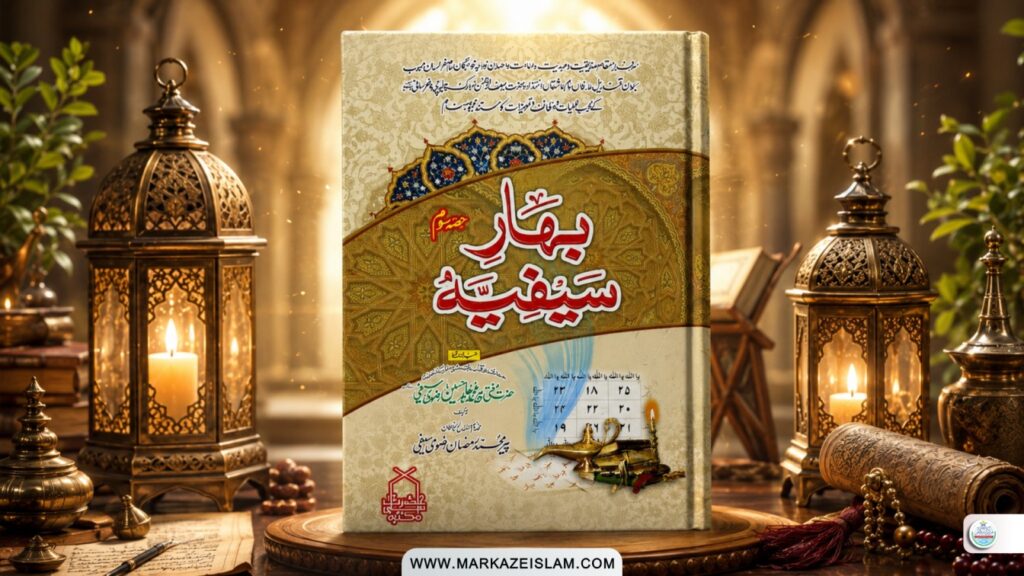
In this article we have described the virtue of the Asma ul-Husna, the Ism-e-A‘zam, and a few selected practices. Further properties of the Names, their practices, and their detailed arrangement are recorded in the book “Bahar-e-Saifiyyah” (Part Three). This book is a collection of the tried and tested (mujarrab) practices and wazifas of Hazrat Saifur Rahman Mubarak, compiled by Pir Muhammad Ramzan Razavi Saifi.
This book is available only through Markaz-e-Islam, and it can now also be obtained online.