A Question That Nags at Every Parent’s Heart
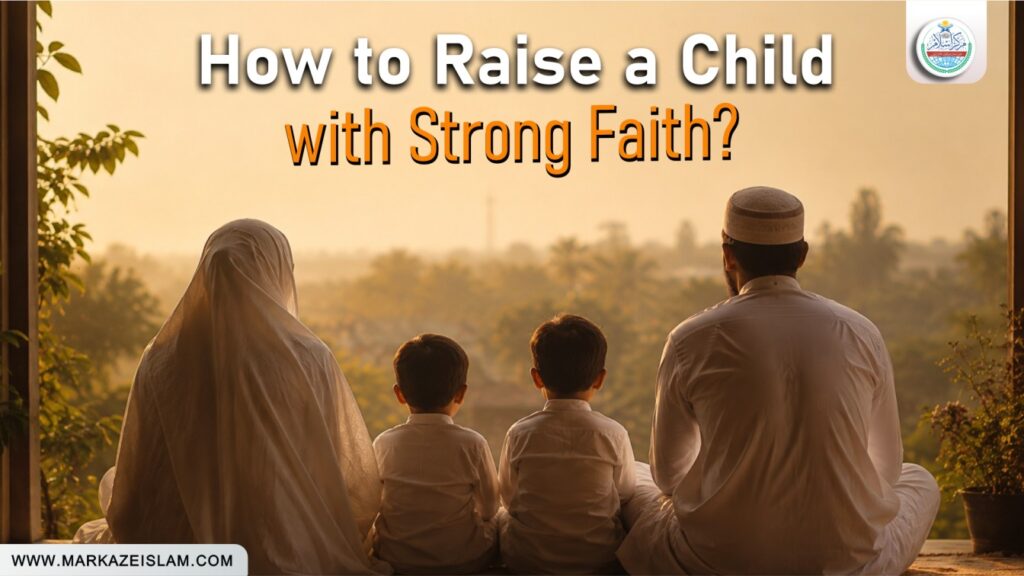
How to Raise a Child with Strong Faith? Imagine — a mother is standing at the window, holding her two-year-old child, watching the rain fall outside. Wondering, the child asks, “Mama, why does water fall from above?” The mother smiles and says, “My dear, this is Allah’s mercy; He sends it down from the sky so the earth stays green and lush.” This small sentence, this ordinary moment — is in fact the first brick of faith being laid in that child’s heart.
Table of Contents
Faith is not something that suddenly descends upon a person one day. It is like a garden that must be watered every day, cared for, and given both sunlight and shade. In today’s age, where children are growing up amid a flood of mobile screens, social media, and materialism, this question has become even more important for parents: how do we light that lamp of faith in our children’s hearts so that it stays lit for a lifetime?
The Noble Prophet ﷺ said: “Every child is born upon the fitrah (that is, Islam); it is his parents who then make him a Jew, a Christian, or a Zoroastrian.” (Sahih al-Bukhari, Hadith No. 1385)
This hadith conceals a profound message — a child comes like a blank canvas, with a pure nature. The responsibility of filling this canvas with color rests with the parents. This blog will be your companion on this very journey — step by step, with examples and wisdom, so that you can raise your child to be not just a good Muslim, but a human being whose heart is filled with the love of Allah.
Part One: Why the Foundation of Faith Must Be Laid in Childhood
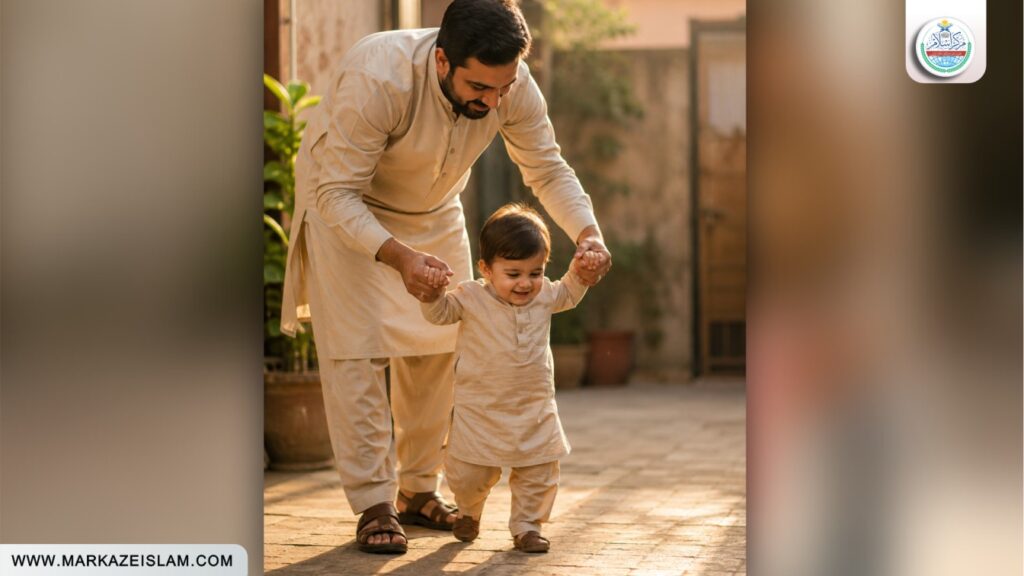
Just as the strength of a building depends on its foundation, in exactly the same way, the strength of a person’s spiritual life depends on the upbringing of childhood. Psychologists too agree that a large part of a person’s personality, habits, and values takes shape in the first seven to ten years. This is the age when a child’s mind is most soft and receptive — just like wet clay, which takes whatever shape it is given.
Islamic teachings also emphasize this point. A well-known piece of advice attributed to Hazrat Ali (may Allah be pleased with him) says: “Prepare your children for a time different from your own.” This saying becomes even more meaningful in today’s age, where children are living in a world entirely different from the experience of our generation.
By age, we can understand the development of faith in four stages.
- First Stage (Birth to Three Years): At this age, the child does not understand words, but does feel the environment. The sound of the adhan at home, parents performing prayer, saying “Bismillah” before eating — all these things get imprinted in the child’s mind unconsciously.
- Second Stage (Four to Seven Years): Now the child begins to ask questions, likes listening to stories, and can understand simple concepts. This is the best age for teaching through stories and examples.
- Third Stage (Eight to Twelve Years): At this age, the child starts leaning toward logic. Now it is not enough to just say “do this” — an answer to “why should we do this” also becomes necessary.
- Fourth Stage (Adolescence): Here the child is searching for their identity. At this age, forcibly imposing faith can prove harmful; rather, giving them the opportunity to understand and adopt it themselves is far more effective.
Each stage carries its own particular wisdom within it, and wise parents are those who keep changing their approach according to the child’s age.
Part Two: Small Everyday Habits of Faith in Daily Life
Great trees grow from small seeds, and the tree of faith too grows from small, everyday habits.
Starting with the Kalimah and Short Surahs
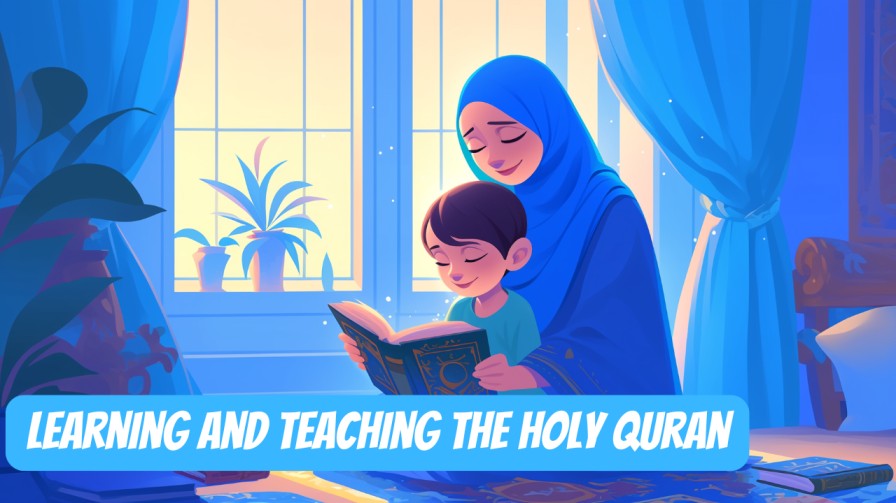
Instead of forcing the child to memorize by rote, teach them through play. Make it a routine to recite Ayat al-Kursi, Surah Ikhlas, Falaq, and Naas before sleep. Children learn through repetition, and when these verses become their lullaby, they become their lifelong companions.
Teach Prayer with Love, Not by Force
The Noble Prophet ﷺ said: “Command your children to pray at the age of seven, and when they reach the age of ten, (for negligence in prayer) give them light discipline.” (Sunan Abu Dawood, Hadith No. 495)
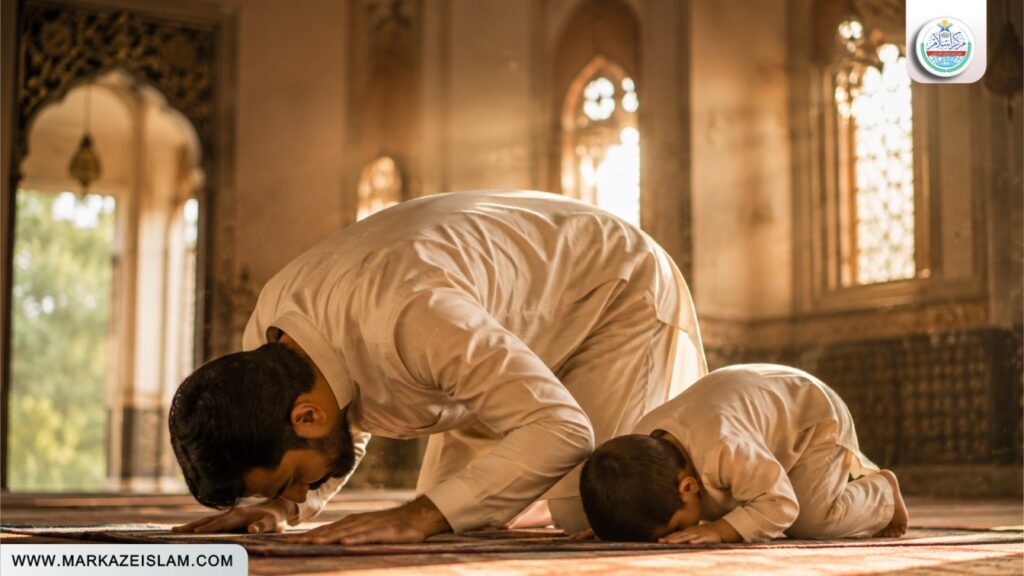
This hadith teaches a gradual method — first command, then explanation, then gradual firmness. But the stage before this is even more important: the child seeing the parent pray. When a father takes his child along to the mosque, when a mother prostrates in front of her child, the child does not learn that prayer is an obligation — rather, they learn that prayer is a loving meeting.
The Habit of Making Dua
Teach the child that even for small things, one can ask Allah. A dua before an exam, a dua for patience when a toy breaks, a dua of gratitude upon seeing rain. In this way, the conviction becomes firmly rooted in the child’s heart that Allah is close to them at every moment, not distant.
Habits of Easy Dhikr
Make short phrases like “SubhanAllah,” “Alhamdulillah,” and “Astaghfirullah” part of the child’s daily conversation. When the child sees something good, teach them to say “SubhanAllah”; upon a mistake, “Astaghfirullah” — these words gradually become part of their thinking.
Part Three: Upbringing Through Stories and Examples
with Strong Faith?
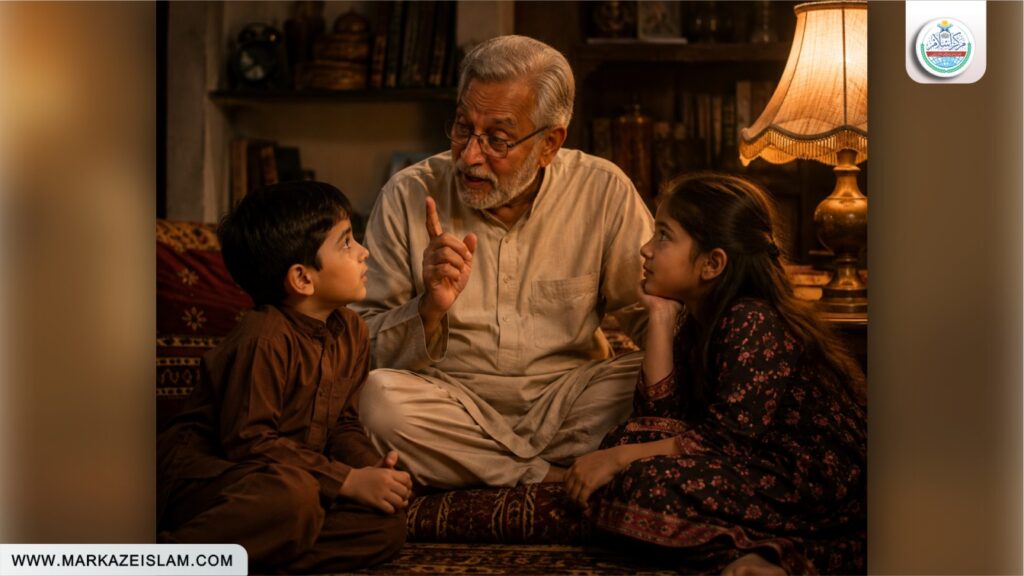
The way of the great Sufi saints has always been this — to present a lesson not as dry advice, but shaped in the mold of a story. Because a story settles into the heart, while a lecture bounces off the ear and goes back out.
The Stories of the Prophets
The patience of Prophet Yusuf (peace be upon him), the steadfastness of Prophet Ayyub (peace be upon him) in the face of trial, the courage of Prophet Musa (peace be upon him) — these stories not only introduce children to Islamic history but also cultivate qualities like patience, courage, and trust in Allah. When narrating these stories, do not just recount the event — also ask: “What do you think you would have done, if you had been in that place?” This makes the child think for themselves.
Accounts of the Companions
The steadfastness of Hazrat Bilal (may Allah be pleased with him), who did not stop saying “Ahad, Ahad” even on scorching sand, or the accounts of the bravery of Hazrat Khalid bin Waleed (may Allah be pleased with him) — these stories instill in children the values of character and courage far more effectively than mere advice.
The Use of Parables
In the Holy Quran, Allah Almighty Himself has used parables in many places to make things easier to understand. Following this same principle, use examples from everyday life when talking to your child. For instance, compare faith to a plant that needs water, sunlight, and care — and if neglected, it wilts.
Part Four: The Deep Connection Between Character and Faith
with Strong Faith?
Faith is not something separate, confined only to prayer and fasting. True faith is reflected in a person’s character. The Noble Prophet ﷺ said: “The most complete in faith among you is the one who is best in character.” (Sunan al-Tirmidhi, Hadith No. 1162)
Truthfulness and Honesty
Explain to the child the importance of speaking the truth — not just by saying “lying is a sin,” but by telling them that truthfulness brings a person closer to Allah and gives peace to their heart. If the child ever tells a lie, rather than reacting with anger, gently explain that speaking the truth is difficult at first, but the outcome is always better.
Respect for Parents
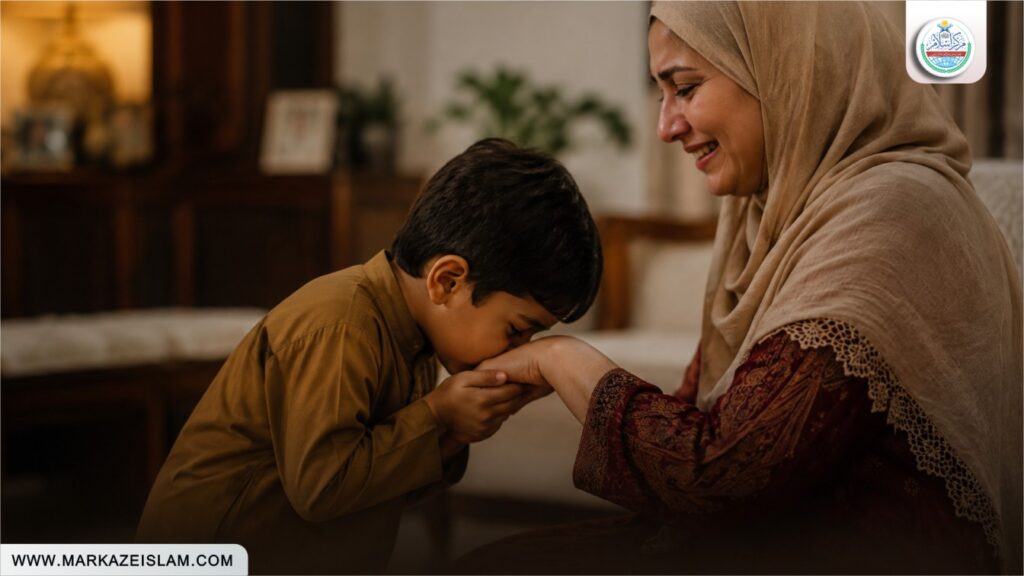
In the Holy Quran, Allah Almighty mentions good treatment of parents immediately after mentioning His own worship. In Surah Bani Isra’il, it is stated that one should not even say “uff” to one’s parents, and should speak to them with gentleness and respect. Teaching the child that respecting parents, elders, and teachers is in fact part of faith creates depth in their character.
Gratitude and Contentment
In today’s age, children grow up in an environment of constant comparison — other people’s toys, other people’s clothes, other people’s lives. In such a situation, cultivating the habit of gratitude is very important. Before sleeping at night, ask the child: “What should you thank Allah for today?” This small habit, over time, cultivates contentment in their heart.
Part Five: The Home Environment — The Nursery of Faith
with Strong Faith?
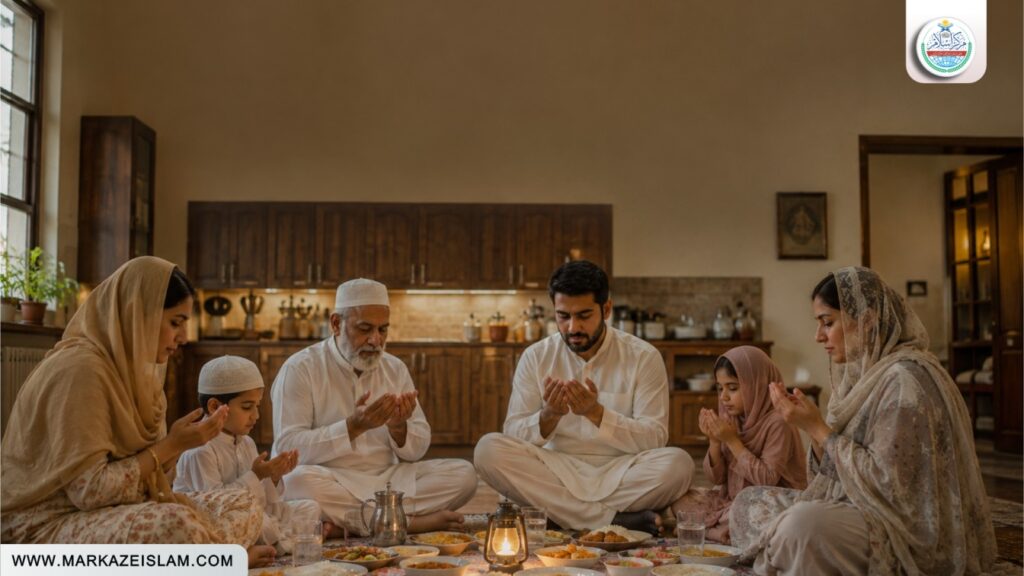
The largest part of what a child learns, they learn from the home environment — not from any book or lecture.
An Islamic Environment at Home
Let the sound of Quran recitation echo through the home, make it a routine to say “Bismillah” before eating and “Alhamdulillah” after, treat guests with gentleness and honor — all these things together create the environment in which faith grows on its own, without any compulsion.
The Challenge of Screen Time and Modern Media
This is a topic every parent faces today. Total restriction often fails, while total freedom is dangerous. The better path is to maintain balance — sit with the child and explain which content is beneficial and which is a waste of time, and also provide alternatives to screens, such as books, games, or family time.
The Role of Family, the Mosque, and the Madrasah
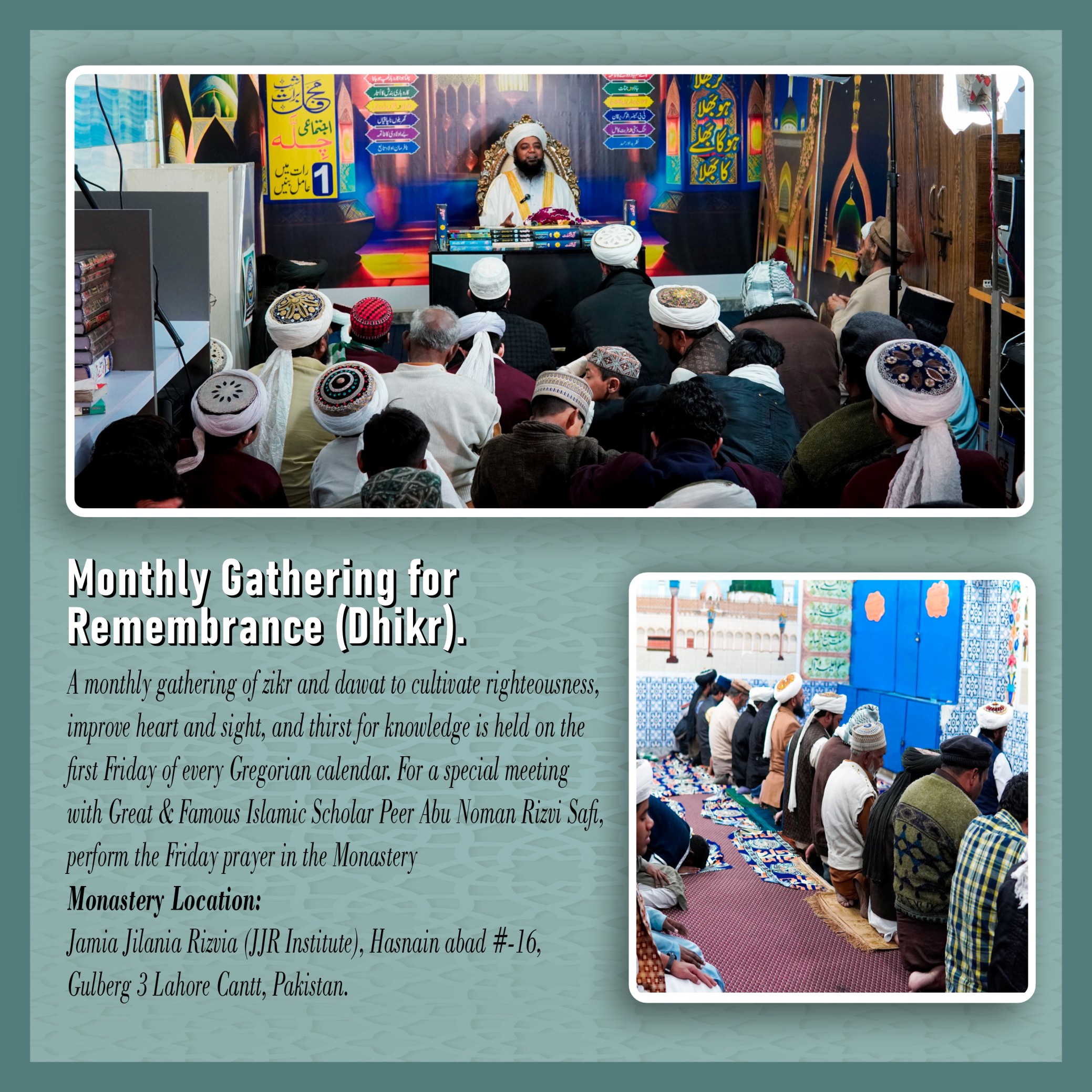
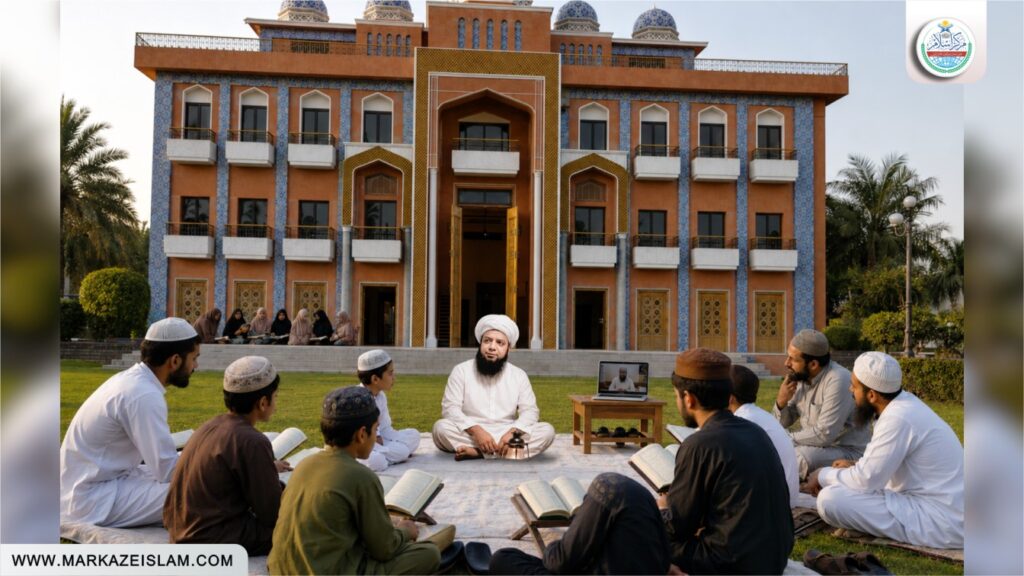
Do not leave the child alone on this journey. Take them to the mosque, include them in family gatherings, and if possible, connect them with a good madrasah or Islamic educational institution. There is a strength in community that cannot be found in isolation.
with Strong Faith?
If you too are looking for an authentic and trustworthy institution for the religious and spiritual upbringing of yourself or your family, then Markaz-e-Islam welcomes you. Here, in the light of the Quran and Sunnah, you can benefit from online and physical classes for dhikr and remembrance, authentic wazaif and spiritual practices, correction of deeds, teaching of the Holy Quran, and other religious training courses. For more information, registration, and to connect with us, be sure to check out our website, social media pages, and training form.
Part Six: When a Child Asks a Difficult Question
Every child is full of questions, and this is a blessing, not a trouble. “Where is Allah?”, “Why can’t we see Allah?”, “Why do bad things happen?” — these questions are in fact a sign of the growth of the child’s intellect.
When a child asks such a question, instead of scolding them or dismissing them with “it’s just how it is,” give a simple answer suited to their age. For example, a young child can be told: “Just as we don’t see the air but we do feel it, in the same way we cannot see Allah, but He is very close to us.” An older child can be given a somewhat deeper explanation.
When discussing difficult topics like death and destiny, rather than giving false comfort, state a simple truth, and acknowledge the child’s feelings. Never make curiosity a cause for embarrassment, otherwise the child will stop asking questions and will keep harboring doubts inside.
Part Seven: Common Mistakes Parents Must Avoid
Even parents with the best intentions sometimes make mistakes on this journey of upbringing that can prove harmful.
First Mistake: Giving commands without explanation. “Because I said so” — this sentence may secure obedience in the short term, but in the long term, due to a lack of understanding, the child may become distant from that practice.
Second Mistake: Fear-based teaching. If a child is constantly frightened with the punishment of Hell and the wrath of Allah, without any mention of His mercy and love, then in the child’s heart the concept of Allah becomes one of fear and distance rather than love — whereas in the Holy Quran, Allah Almighty is called “Ar-Rahman, Ar-Raheem” at the beginning of every surah.
Third Mistake: Contradiction between words and actions. Urging the child to speak the truth but lying in front of them yourself, urging them to pray but being lazy about your own prayers — children learn more from watching actions than from words.
Fourth Mistake: Making comparisons. “Look how good so-and-so’s child is, why aren’t you?” — sentences of this kind damage the child’s confidence and can push them away from faith.
Part Eight: Parents’ Duas and Their Own Spiritual State
8img
with Strong Faith?
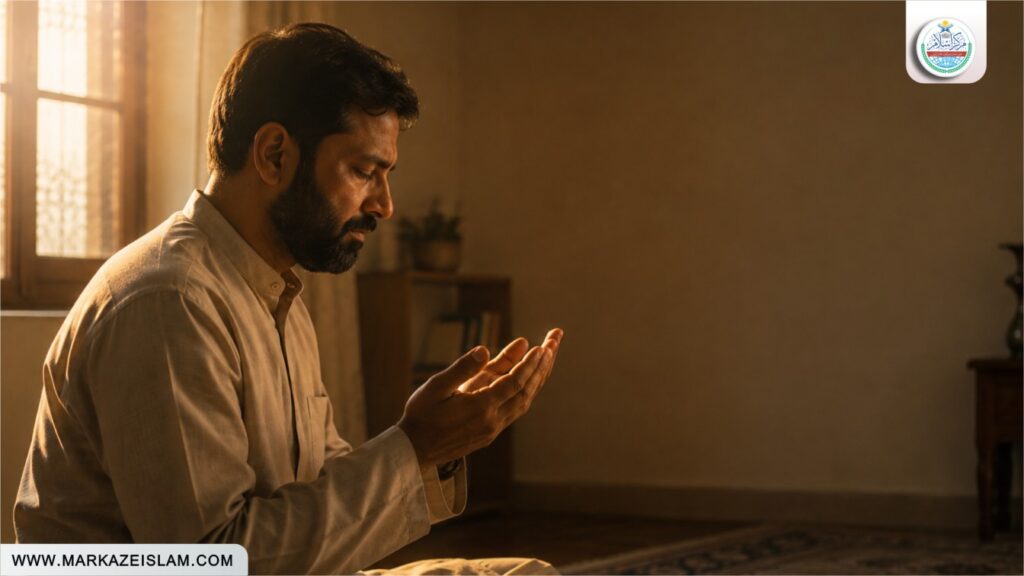
The most powerful weapon in a child’s upbringing is dua. The dua of Prophet Ibrahim (peace be upon him) is preserved in the Holy Quran, in which he asked for the ability for his offspring to establish prayer. In the same way, you too should pray daily for your children, that Allah illuminate their hearts with faith.
Along with this, remember that a child is a mirror of their parents’ spiritual state. If parents themselves are negligent in their own prayers, if there is quarreling and unrest in the home instead of peace and love, then the roots of faith cannot grow strong in the child’s heart. So the very first step is for parents themselves to focus on reforming themselves — because it is only a lit lamp that can light another lamp.
Part Nine: Adolescence — The Most Delicate Stage

with Strong Faith?
Adolescence is the age when a child is searching for their identity, where friends’ opinions begin to feel more important than parents’ opinions. In this period, forcibly imposing faith often has the opposite effect.
The best strategy at this age is to maintain a friendly relationship with the child, so that they can openly express their concerns and questions. Make them feel that faith is not a burden upon them, but a path that gives them inner peace and a sense of purpose. Understand the pressures of social media and the modern world, adopt a balanced approach rather than rejecting it entirely, and above all — give the young person the opportunity to embrace their faith themselves, with their own understanding and conviction, and not merely because of parental pressure.
Final Part: A Practical Checklist — Start Today
Below is a simple list that you can start incorporating into your daily life from today.
- Make it a routine to recite short surahs to the child before sleep.
- Take the child along with you at prayer time, without forcing them.
- Once a week, narrate a story of a prophet or a companion.
- Ask the child daily what they should be thankful to Allah for today.
- Never ignore the child’s questions, no matter how difficult they may be.
- Focus on your own worship and character, because the child learns by watching you.
- Make a special dua for the child every day.
- Maintain an atmosphere of love and gentleness at home, not strictness and fear.
(FAQs) Frequently Asked Questions
with Strong Faith?
Q1: At what age should a child be taught to pray?
According to the noble hadith, a child should be commanded to pray at the age of seven, and gently guided if they are not praying by the age of ten. But even before that, from the age of three or four, it is beneficial to have the child observe prayer and stand alongside it, so that this practice becomes natural for them.
Q2: If a child asks questions related to faith and the parents don’t know the answer, what should be done?
In such a situation, rather than feeling embarrassed, say honestly, “I need to find out more about this, then we’ll discuss it together.” Afterward, obtain the information from a reliable scholar or an authentic source and satisfy the child. This way, the child learns that learning is an ongoing process.
Q3: Is it right to be strict with children regarding matters of faith?
There is a difference between strictness and discipline. Discipline is necessary, but strictness that creates fear and distance should be avoided. A lesson taught with love and gentleness settles deep into the heart and lasts longer.
Q4: How can modern technology and screen time affect a child’s faith?
If used without supervision, it can negatively affect a child’s attention, character, and thinking. However, total restriction is not the solution either. Balanced use, parental supervision, and providing meaningful alternative activities is a more effective strategy.
Q5: If a child starts drifting away from faith during adolescence, what should be done?
First and foremost, do not let go of patience and love. Strictness and pressure often increase the distance. Have open conversations with them, listen to their concerns, and present faith as a source of peace rather than a burden. Also keep praying for them constantly.
Q6: Is sending the child to a madrasah alone enough?
A madrasah is certainly an important resource, but it cannot replace upbringing at home. Real upbringing happens through the home environment, the parents’ actions, and daily habits. The madrasah and the home together produce the best results.
Q7: What is the most important thing when teaching a child about faith?
The most important thing is consistency and love. Results do not come from a single day’s effort; rather, small everyday habits, over time, come together to build the foundation of strong faith.
Raising Children with Strong Faith Is a Journey That Demands Patience and Love

with Strong Faith?
Raising a child with strong faith is not something that can be completed in a day, a week, or a month. It is a long journey, one that requires patience, love, wisdom, and constant dua. Sometimes difficulties will come along the way, questions will create confusion, and sometimes it will even feel that all efforts are going to waste. But remember, just as a gardener does not expect fruit immediately after planting a tree, but keeps watering it patiently, in exactly the same way, this seed of faith too, over time, nurtured with love and dua, grows into a sturdy tree.
We pray to Allah Almighty that He illuminates our children’s hearts with the light of faith, and grants us the ability to raise them in the best way. Ameen.
Connect With Us
If you too are looking for an authentic and trustworthy institution for the religious and spiritual upbringing of yourself or your family, then Markaz-e-Islam welcomes you. Here, in the light of the Quran and Sunnah, you can benefit from dhikr and remembrance, authentic wazaif and spiritual practices, correction of deeds, online Quran education, and other religious training courses. For more information, registration, and to connect with us, be sure to check out our website, social media pages, and training form.
Markaz-e-Islam | Trainings and Registration | Facebook | YouTube Channel