
In almost every civilization and every religion of the world, there come moments when a person seeks spiritual support alongside physical treatment. This spiritual support is commonly known as “faith healing,” or healing through faith. In Islam, this concept does not exist as some vague or speculative practice; rather, it exists in the form of a clear, complete, and safeguarded method known as “Ruqyah,” which in common usage is called “Dam.”
Table of Contents
This article will explain in detail what faith healing actually means, how Islam presents it in the form of Ruqyah and Dam, what evidence exists for it from the Qur’an and Sunnah, and — most importantly — how to distinguish a correct and lawful practice from superstition and deception.
What Does Faith Healing Actually Mean?
Faith healing refers to relying on prayer, worship, or a spiritual means to obtain relief from an illness, distress, or spiritual affliction — a practice carried out either alongside conventional medical treatment or as an alternative to it. The term itself is very broad and is used differently across various religions and cultures, and it is precisely for this reason that it is essential for Muslims to understand it from an Islamic perspective; otherwise unnecessary confusion and misunderstanding can arise.
In Islam this is nothing new or self-invented. It has a clear name, a defined method, and certain set limits — and this is precisely where the concept of “Ruqyah” comes in.
Islam’s Equivalent: Ruqyah and Dam
Ruqyah (رقية) is an Arabic word meaning the recitation of verses of the Holy Qur’an, the beautiful names of Allah, and authentic supplications over a person who is seeking protection or healing. In the Indian subcontinent, this same practice is commonly called “doing Dam” — that is, gently blowing over a person, water, or oil after the recitation.
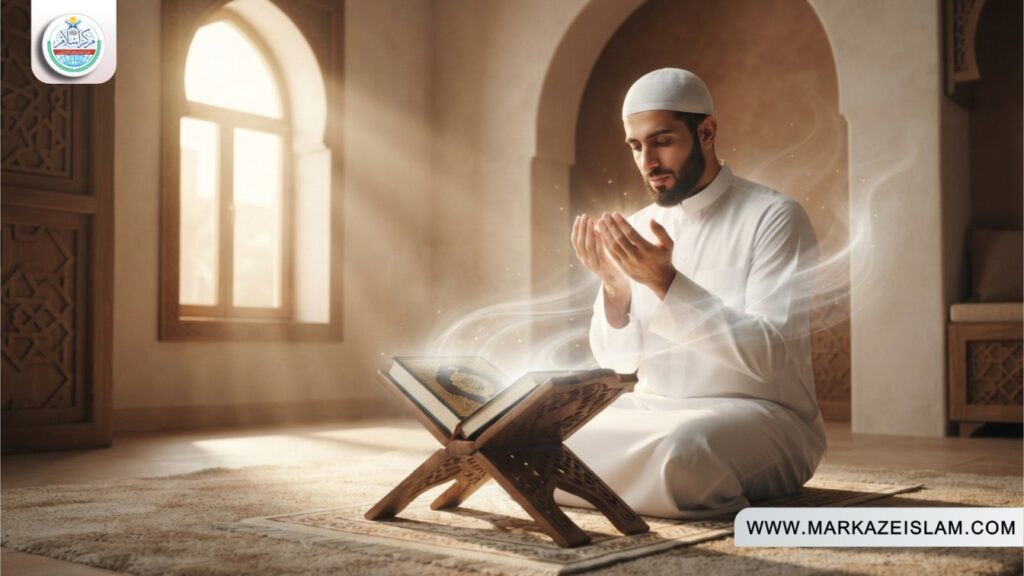
This is not some local custom, but a practice directly established through the Sunnah of the Noble Prophet ﷺ. He ﷺ himself performed Ruqyah and also encouraged his noble Companions to do so — whether for physical illness, the effect of the evil eye, or the effects of black magic.
The Two Types of Ruqyah: Shar’iyyah and Shirkiyyah
Scholars have divided Ruqyah into two clear categories, and understanding this distinction is extremely important before undertaking any such practice.
• Ruqyah Shar’iyyah (Lawful Ruqyah): In this, only verses of the Holy Qur’an, the authentic names of Allah, and supplications established through the Sunnah are used. In this practice, help is sought from Allah Almighty alone and no one else.
• Ruqyah Shirkiyyah (Unlawful Ruqyah): In this, unknown words, unclear symbols, or help sought from jinn and spirits are involved — this practice falls into the category of shirk (associating partners with Allah) and is unlawful, no matter how “spiritual” it may appear.
This distinction is, in fact, the fundamental criterion that separates genuine Islamic faith healing from superstition. Unfortunately, nowadays many so-called spiritual practitioners blur this very distinction and lead people down the wrong path.
Evidence from the Qur’an and Sunnah
The Holy Qur’an itself describes itself as a source of healing. In Surah Al-Isra, Allah Almighty states that what has been revealed in the Qur’an is a healing and a mercy for the believers. In Surah Yunus as well, the Qur’an is described as a healing for the ailments of the hearts.
The Noble Prophet ﷺ himself performed Ruqyah during his lifetime, particularly during his final illness, and he taught the Companions specific supplications for pain, fear, the evil eye, and restlessness. This is why scholars do not regard Ruqyah as some optional or folk custom, but consider it a practice founded on clear Qur’anic and Prophetic grounds.
How Does Ruqyah Work? The Spiritual Dimension
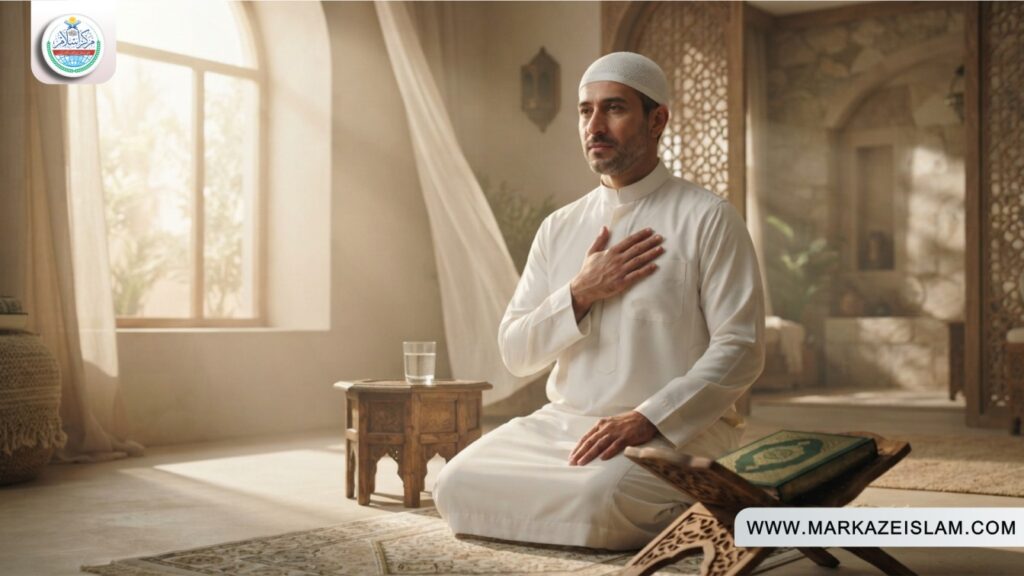
From an Islamic perspective, Ruqyah has an effect on several levels simultaneously.
• Spiritual Purification — Qur’anic recitation helps cleanse the heart of spiritual impurity and weaken any harmful effect.
• Divine Protection — Recitation invites the mercy of Allah, which forms a spiritual shield around the affected person.
• Emotional and Psychological Calm — The Qur’an grants tranquility to a troubled heart, which is why many people, after sincere recitation, feel a reduction in their anxiety and restlessness.
One important point should be kept in mind here: Ruqyah is not some automatic, magical act that takes effect on its own regardless of intention. Scholars emphasize that it is sincerity, correct belief, and complete trust in Allah that make this practice effective — not merely the utterance of words.
Conditions for the Validity of Ruqyah
Not every practice that is labeled as “spiritual healing” is acceptable in Islam. To keep Ruqyah within its lawful limits, scholars generally agree on the following conditions:
• Only Qur’anic verses, the names of Allah, or authenticated supplications should be used — no unknown or unverified words should be included.
• The belief must remain firm that healing comes from Allah alone, and that recitation is merely a means, not the source of healing itself.
• This practice can be performed on oneself, or at the request of a knowledgeable person — it is not restricted only to a scholar or spiritual guide (pir).
Common Applications of Ruqyah
People generally turn to Ruqyah or Dam for the following issues. Detailed articles on each of these topics already exist in our blog series, references to which are provided below:
• The evil eye affecting health, mood, or a child’s behavior — further detail on this is available in our article “Treatment for the Evil Eye” (Urdu-language article).
• Suspected effects of black magic (sihr) — to understand the difference between genuine Ruqyah and magic, do read our article “Sorcery, Black Magic, and Its Treatment” (Urdu-language article).
• Persistent restlessness, unexplained sadness, or a heavy and unsettled heart — our dedicated article “Peace and Restlessness” provides further guidance on this (Urdu-language article).
• For everyday protection, especially the daily recitation of Surah Al-Falaq and Surah An-Nas — a separate article of ours, “Means of Protecting Homes from Jinn and Devils” covers this topic (Urdu-language article).
If you want to know the complete, step-by-step method for this, our separate article “How to Perform Ruqyah at Home” explains this topic in further detail.
A Complete Ruqyah for Heart Ailments
Before beginning this practice, it is the Sunnah way to give charity (Sadaqah) according to one’s means, so that the mercy and ease of Allah Almighty may descend. After giving charity, this practice should be begun while keeping one’s intention sincere.
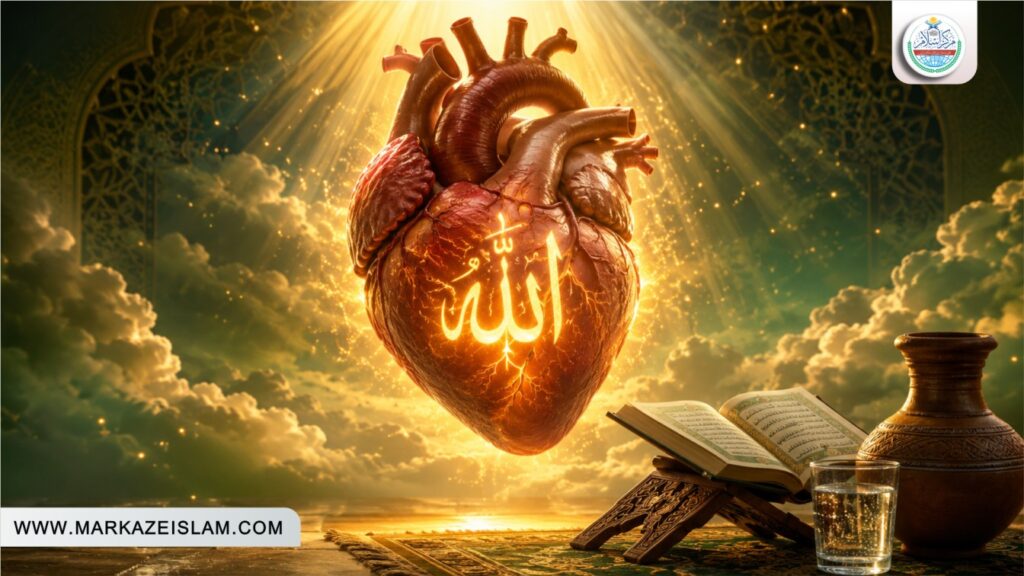
The practical method is as follows: recite Surah Al-Inshiqaq (Para 30). Whenever the verse requiring prostration (Sajdah) occurs during the recitation, perform the prostration immediately, then rise and continue the recitation until the entire Surah is completed. In this way, recite the Surah eleven times, and do not forget to perform the prostration on the relevant verse each time. Once the eleven recitations are completed, blow (perform Dam) eleven times over the water in an earthen pitcher (matka). It is necessary to complete this entire practice in a single sitting.
This blown-upon water should be used for seven days — whenever the patient wants water during the day, this same water should be given to drink. If the water runs out before the seven days are complete, then on the eighth day prepare the water again in the same manner and continue giving it for seven days. This entire practice should be repeated five times. In sha’ Allah, through this consistent practice and sincerity of intention, the patient’s condition will soon improve. It should be kept in mind here that this spiritual practice is a complementary support for a heart patient — in a sensitive and serious illness such as heart disease, it is essential in every case to continue diagnosis and treatment with a qualified physician, and this spiritual practice should not be taken as a substitute for medical supervision.
Common Mistakes and Precautions During Ruqyah
Many people, despite good intentions, make certain common mistakes while performing Ruqyah, and it is important to avoid these:
• Reciting in haste — without paying attention to meaning and correct pronunciation, which reduces the effect.
• Expecting an instant and dramatic result — whereas genuine healing usually manifests gradually and internally.
• Abandoning medical treatment altogether — whereas Ruqyah is not a substitute for medical treatment, but a spiritual support that runs alongside it.
• Going to some “amil” or so-called spiritual healer who recites something in an unknown language or promises an “instant solution” in exchange for money — this is often a sign of fraud.
Can Ruqyah Be Performed on Oneself?
Yes, performing Ruqyah on oneself is not only permissible but is an act established through the Sunnah and recommended (mustahabb), provided that only authentic verses and supplications are used and the intention is purely to rely on Allah. Going to any particular scholar, pir, or amil is not necessary for this. The common method is to recite Surah Al-Fatihah, Ayat al-Kursi, Surah Al-Ikhlas, Al-Falaq, and An-Nas, then blow onto one’s own hands and pass them over the body, or to blow (perform Dam) over water and then drink it.
If for some reason no effect is felt on oneself, or the matter seems more complicated, one may consult a trustworthy and knowledgeable person who adheres to the limits of Ruqyah Shar’iyyah. Our separate article “How to Recognize the Difference Between Amaliyat (Occult Practices) and Magic” provides further guidance on this so that you do not fall victim to any deception (Urdu-language article).
Common Misconceptions
Some misconceptions about this topic come up repeatedly, and it is necessary to clarify them.

• Misconception: Any spiritual healer can perform correct Ruqyah. Reality: What matters more than a person’s claims or title is their sincerity and the correctness of their method.
• Misconception: Ruqyah always produces an immediate and visible reaction. Reality: Genuine healing is usually felt gradually and internally, not in a dramatic manner.
• Misconception: Faith healing is a substitute for medical treatment. Reality: Scholars clearly state that Ruqyah is not a replacement for medical treatment, but rather a spiritual means that runs alongside it, and consulting a doctor when needed is essential.
Frequently Asked Questions
• Are Faith Healing and Ruqyah the Same Thing?
Not at all. Faith healing is a general term used differently across various religions, whereas Ruqyah is its specific Islamic, Qur’an-based method, which has clear limits and conditions that keep it distinct from superstition.
• Can I Perform Dam on Myself Without a Scholar?
Yes. Performing Ruqyah on oneself is established through the Sunnah and recommended, provided that only authentic verses and supplications are used and the intention is sincere.
• Is It Permissible to Blow (Perform Dam) on Water or Oil?
Yes, this is a well-known and authenticated practice. After recitation, one blows over water or oil, which is then drunk or applied to the body, and support for this is also found in the reports (athar) of the Companions and the Tabi’in.
• What Should Be Done If No Immediate Effect of Ruqyah Is Felt?
There is no need to worry. Continue the recitation with sincerity, remain patient, and at the same time, if the physical or mental distress is severe, also consult a qualified doctor — these two things are not opposites but rather complement one another.
The Real Principle for Safeguarding One’s Faith Is Recognizing the Path of Truth
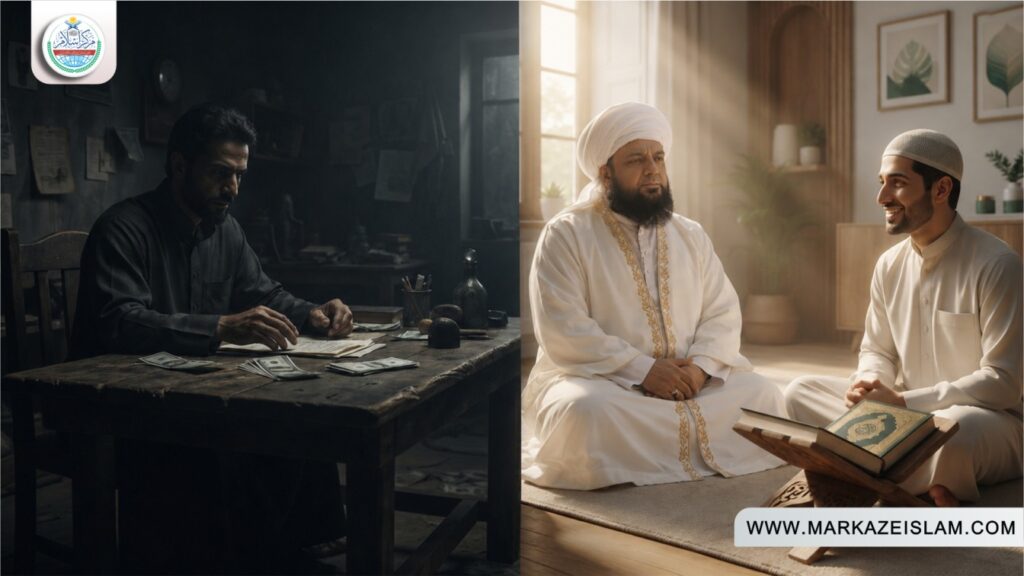
When faith healing is placed in its correct Islamic context, it remains neither something mysterious nor uncertain — it is, in fact, Ruqyah: a practice based on the Qur’an, established through the Sunnah, which seeks healing through sincerity of intention and complete trust in Allah. Understanding the distinction between Ruqyah Shar’iyyah and Shirkiyyah protects Muslims from deception, exploitation, and confusion, and preserves this beautiful, deeply rooted tradition exactly as it should be — a means of peace, protection, and closeness to Allah.
Note: This article has been written for informational and spiritual guidance purposes, and is derived from the well-known work (Aaina-e-Futuhat aur Bahar-e-Saifiyyah) of Hazrat Sarkar Pir Abu Nu’man Rizvi Saifi Sahib, Daamat Barakaatuhum al-Aaliyah.
And this is not a substitute for qualified medical advice. If anyone is facing a serious physical or mental issue, they should certainly consult a qualified doctor alongside the spiritual practice.
To Obtain the Book
If you wish to purchase “Aaina-e-Futuhat aur Bahar-e-Saifiyyah,” you may get in touch using the number or link given below:
Link: Aaina-e-Futuhat
For the Resolution of Spiritual Problems
If you are troubled by black magic, jinn, the evil eye, binding spells (bandish), or other spiritual problems, and have grown disheartened after visiting various places, then at Khanqah-e-Awliya Rizviyyah Saifiyyah, by the grace and favor of Allah Almighty, guidance and treatment according to Shar’i and spiritual principles have been continuing for the past two decades. Please contact us for further information and consultation.
Contact: 00923077869280
Pingback: How Ruqyah Removes the Effects of Jinn - Markaz-e-Islam